Opening Prayer
Most High and Most Near, Most Mighty and Most Merciful, you are constant yet incomprehensible, unchangeable yet changing all things. You are the Lord who is always working yet always at rest, seeking us though you lack nothing, and paying your debts to us though you owe us nothing.
I ask for the grace to find my holy joy in the mystery of your nature. Let the realization that you are beyond my understanding not frustrate me, but rather draw my soul into a deeper state of worship and tranquil love.
Amen.

Matthew 8:23–27
23And when he entered into the boat, his disciples followed him: 24And behold a great tempest arose in the sea, so that the boat was covered with waves, but he was asleep. 25And they came to him, and awaked him, saying: Lord, save us, we perish. 26And Jesus saith to them: Why are you fearful, O ye of little faith? Then rising up he commanded the winds, and the sea, and there came a great calm. 27But the men wondered, saying: What manner of man is this, for the winds and the sea obey him?

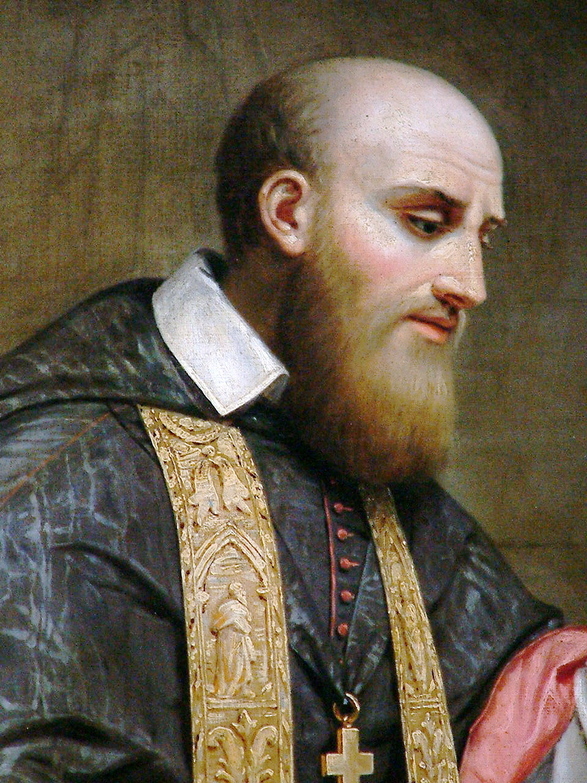
St. Francis de Sales
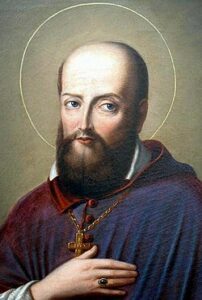
St. Francis de Sales, in his meditation on creation, offers a rigorous spiritual exercise to help the soul rediscover its blueprint. He challenges the believer to contemplate the moment of their origin: “Consider that only a few years ago you had not yet been born… and your soul did not even exist”. This realization of our “radical contingency” is the beginning of wisdom. De Sales posits that God brought us out of nothingness not because He had any need of us, but “solely out of His goodness”.

St. Francis de Sales explains that our nature is the “highest nature of this visible world”, specifically adapted to live eternally and be “perfectly united to God’s divine majesty”. This is not generic piety; it is a “science of the saints” that recognizes our life as a gift held in trust.
“God brought you out of that nothingness, in order to make you what you are—not because he had any need of you, but solely out of his goodness.”
— St. Francis de Sales
Mary and the Magisterium
The Blessed Virgin Mary serves as the “Mirror of Virtue” because she perfectly understood her purpose as a creature. The Magisterium, through St. Vincent of Lérins, teaches that we must fortify our understanding of our purpose through “Sacred Tradition”. We cannot be “cafeteria Catholics” with our own existence, picking which parts of God’s plan we accept; rather, we find our “teleological rest” in the “immediate, implicit submission” to the Church‘s interpretation of human dignity.

- If I am truly "nothing without God", why do I spend the majority of my day acting as though my worth depends on my "domestic or professional productivity"?
- How would my reaction to today's "spiritual paper cuts" change if I truly believed I was a "stone being prepared by God the Builder" for a specific place in His eternal Temple?
Closing Prayer
Thou art magnificent, O Lord, and though my words be feeble, let my praise bring Thee glory.
Amen.