Opening Prayer
Lord, I take up the Psalter as a mirror for my soul, where I may see my own emotions and trials rectified in the Spirit’s words. Let these sacred prayers become my very own, so that when I sing of tribulation or repentance, I am speaking of the stirrings of my own heart. I recognize that the whole of human existence has been measured out in these words.
I petition Thee for the grace to let the words of the Psalms chasten my life and measure out my dispositions. Let them serve as both examples and standards for my human existence. Through these verses, may I find my own soul’s movements captured and offered back to Thee in a memorial of holy emotion.
Amen.

Luke 15:1-10
1Now the publicans and sinners drew near unto him to hear him. 2And the Pharisees and the scribes murmured, saying: This man receiveth sinners, and eateth with them. 3And he spoke to them this parable, saying: 4What man of you that hath an hundred sheep: and if he shall lose one of them, doth he not leave the ninety-nine in the desert, and go after that which was lost, until he find it? 5And when he hath found it, lay it upon his shoulders, rejoicing: 6And coming home, call together his friends and neighbours, saying to them: Rejoice with me, because I have found my sheep that was lost? 7I say to you, that even so there shall be joy in heaven upon one sinner that doth penance, more than upon ninety-nine just who need not penance. 8Or what woman having ten groats; if she lose one groat, doth not light a candle, and sweep the house, and seek diligently until she find it? 9And when she hath found it, call together her friends and neighbours, saying: Rejoice with me, because I have found the groat which I had lost. 10So I say to you, there shall be joy before the angels of God upon one sinner doing penance.

St. Athanasius
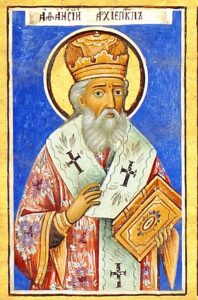
St. Athanasius notes that the Psalms encompass “the whole of human existence.” When we sing them, “we recognize the words as our very own.” This Church Father perspective highlights the Psalms’ role in the Liturgical life. They provide the “standard” for our souls as we prepare to receive the Eucharist, the “food for the soul”. In the Mystical Body, the Psalms allow us to “see ourselves” and be “chastened” in our lives. They capture the “dispositions of the soul” and “movements of the mind” for all members of the One Body.

Athanasius commends the “precision of expression” in the Book of Psalms. He argues that they are “composed and spoken by the Spirit” to grasp the “stirrings of our soul.” He suggests that whether in “tribulation,” “repentance,” or “persecution,” the Psalter allows us to speak to the Lord “as if they concern us.”
“The one who hears the Psalter chanted is deeply moved, as though he himself were speaking. It seems to me, then, that these words become like a mirror to the one who sings them.”
— St. Athanasius
Mary and the Magisterium
Mary, the “daughter and bride of the Most High King”, sang her own Psalm, the Magnificat. She is the “Mirror of Virtue” that the Psalms perfectly reflect. The Magisterium, through the Bishop, ensures that the Psalms remain the “prayer of the Church,” as seen in the daily Liturgy and the “Office”. The Bishop preserves the unity of prayer by anchoring the flock in these Spirit-composed words.

- Am I making good use of the Psalms in my private prayer?
- Do I recognize my own soul's journey—its "emotions" and "dispositions"—in the words of the Psalter?
Closing Prayer
Lord, thank you for including the Psalms in your Word as a mirror for my soul. Teach me to look deeply into that mirror.
Amen.