Opening Prayer
Lord, Thou art full of good, all good, the supreme and true Good. I desire to love Thee with all my heart, soul, mind, and strength, holding Thee continually in my heart as my Creator and Savior. Let nothing please or delight me except Thee, the One who is wholly desirable above all forever.
I petition Thee to let nothing hinder or separate my soul from Thy love. Grant me the grace to offer my daily existence as a sacrifice of thanks to the One who is unchanging, beyond understanding, and most sweet. May nothing come between my spirit and Thy supreme goodness.
Amen.

Matthew 19:27-29
27Then Peter answering, said to him: Behold we have left all things, and have followed thee: what therefore shall we have? 28And Jesus said to them: Amen, I say to you, that you, who have followed me, in the regeneration, when the Son of man shall sit on the seat of his majesty, you also shall sit on twelve seats judging the twelve tribes of Israel. 29And every one that hath left house, or brethren, or sisters, or father, or mother, or wife, or children, or lands for my name’s sake, shall receive an hundredfold, and shall possess life everlasting.

St. Francis of Assisi
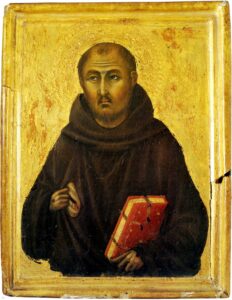
St. Francis of Assisi exhorts the faithful to let nothing hinder us, let nothing separate us from the “Supreme Good”. This vision is the core of the Liturgical life. In the Mystical Body, we “daily and continually believe in Him” and hold Him in our hearts. This love is fueled by the Eucharist, the “Precious Banquet” where we “receive what we are” to become what we receive. We love Him because “He alone is holy, just, true, and upright,” the source of all Divine Grace and mercy for all penitents and all the just.

St. Francis calls for a love that is “without beginning or end”, encompassing all that rejoice in heaven. He insists that God is always wholly desirable above all forever. He challenges us to love with “our innermost parts” and “all our powers”, for God has created and redeemed us.
“Let’s all love the Lord God with all our heart, soul, mind, strength, and fortitude… He’s created and redeemed us, and by his mercy alone he’ll save us.”
— St. Francis of Assisi
Mary and the Magisterium
Mary is the “Mirror of Virtue” who possessed “ardent love”. She is the “Treasure” through which this love is distributed. The Magisterium, through the Bishop, “interprets authoritatively” the demands of this love, ensuring we are “conducted virtuously” within the Universal Church. The Bishop preserves the unity of this love by ensuring “nothing comes between us” and the “Most High”. Mary, the “Aqueduct” of mercy, helps us love God with all our might.

- Does "anything else please or delight me" more than my Creator?
- How can I "let nothing hinder me" from loving Him today?
Closing Prayer
Glorious God, loving Father… receive my poor praise as the song of a heart wholly indebted to you.
Amen.