
What is the harm in interpreting Scripture for ourselves? St. Augustine reveals the ultimate purpose of Scripture and the dangers of false interpretations.
The Purpose of Scripture is Love of God and Neighbor
Of all, then, that has been said since we entered upon the discussion about things, this is the sum: that we should clearly understand that the fulfillment and the end of the Law, and of all Holy Scripture, is the love of an object which is to be enjoyed, and the love of an object which can enjoy that other in fellowship with ourselves. For there is no need of a command that each man should love himself.
The whole temporal dispensation for our salvation, therefore, was framed by the providence of God that we might know this truth and be able to act upon it; and we ought to use that dispensation, not with such love and delight as if it were a good to rest in, but with a transient feeling rather, such as we have towards the road, or carriages, or other things that are merely means. Perhaps some other comparison can be found that will more suitably express the idea that we are to love the things by which we are borne only for the sake of that towards which we are borne.
Dangers of Mistaken Interpretation
For if he takes up rashly a meaning which the author whom he is reading did not intend, he often falls in with other statements which he cannot harmonize with this meaning. And if he admits that these statements are true and certain, then it follows that the meaning he had put upon the former passage cannot be the true one: and so it comes to pass, one can hardly tell how, that, out of love for his own opinion, he begins to feel more angry with Scripture than he is with himself. And if he should once permit that evil to creep in, it will utterly destroy him.
“For we walk by faith, not by sight.” Now faith will totter if the authority of Scripture begin to shake. And then, if faith totter, love itself will grow cold. For if a man has fallen from faith, he must necessarily also fall from love; for he cannot love what he does not believe to exist. But if he both believes and loves, then through good works, and through diligent attention to the precepts of morality, he comes to hope also that he shall attain the object of his love. And so these are the three things to which all knowledge and all prophecy are subservient: faith, hope, love.
ooo
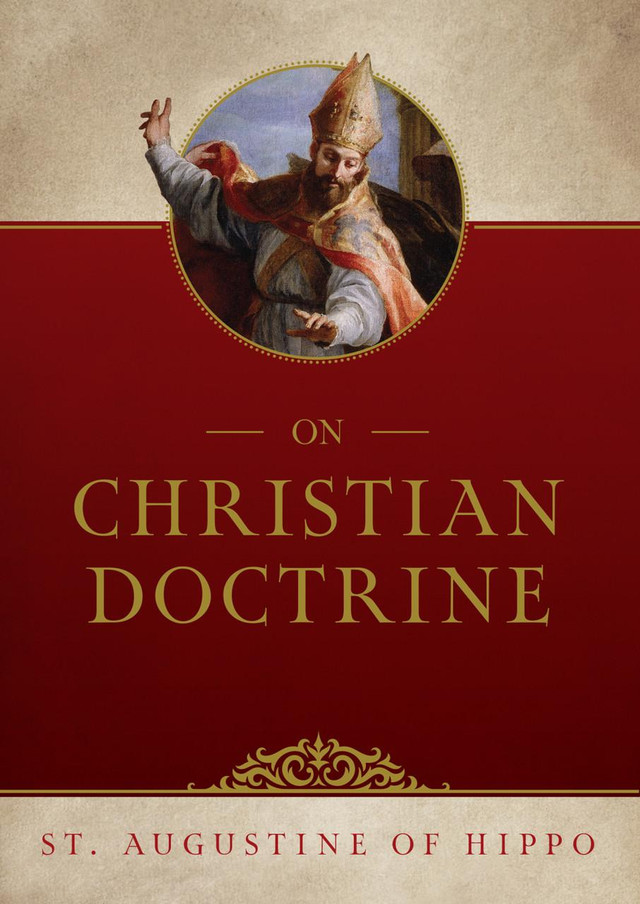
This article is taken from a chapter in On Christian Doctrine by St. Augustine of Hippo which is available from TAN Books.