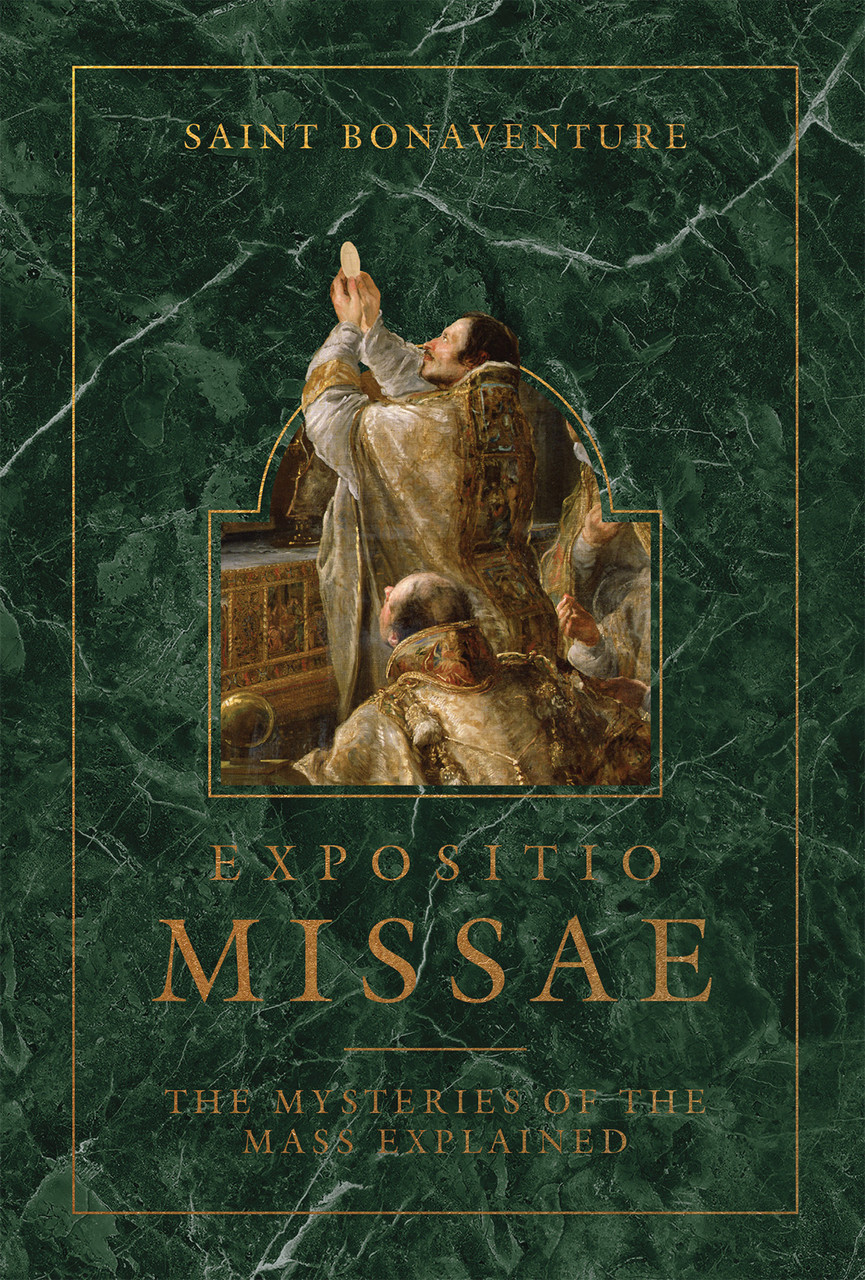
What is the significance of the doxology? Discover the meaning of each word and gesture within the Mass with St. Bonaventure’s Expositio Missae.
The Doxology
Through Him,† and with Him,† and in Him,†
O God, almighty Father, †
in the unity of the Holy Spirit, †
all glory and honor are Yours,
for ever and ever. Amen.
The Priest’s Threefold Sign of the Cross
It is to be noted that during the words “Through Him, and with Him, and in Him,” the sign of the cross is made three times. These commemorate the three days during which Christ rested amongst the dead. They also signify the threefold purposes of His passion and resurrection—namely, the restoration of the heavens, the reparation of the earth, and the redemption of those souls who had been confined to the underworld.
It may also be understood as symbolizing the Trinity, Who is invoked in this doxology. In the Father is represented the authority of God; in the Son is shown the equality of the Divine Persons; and in the Holy Spirit is manifested the perfect communion between these Divine Persons.
The Elevation of the Host
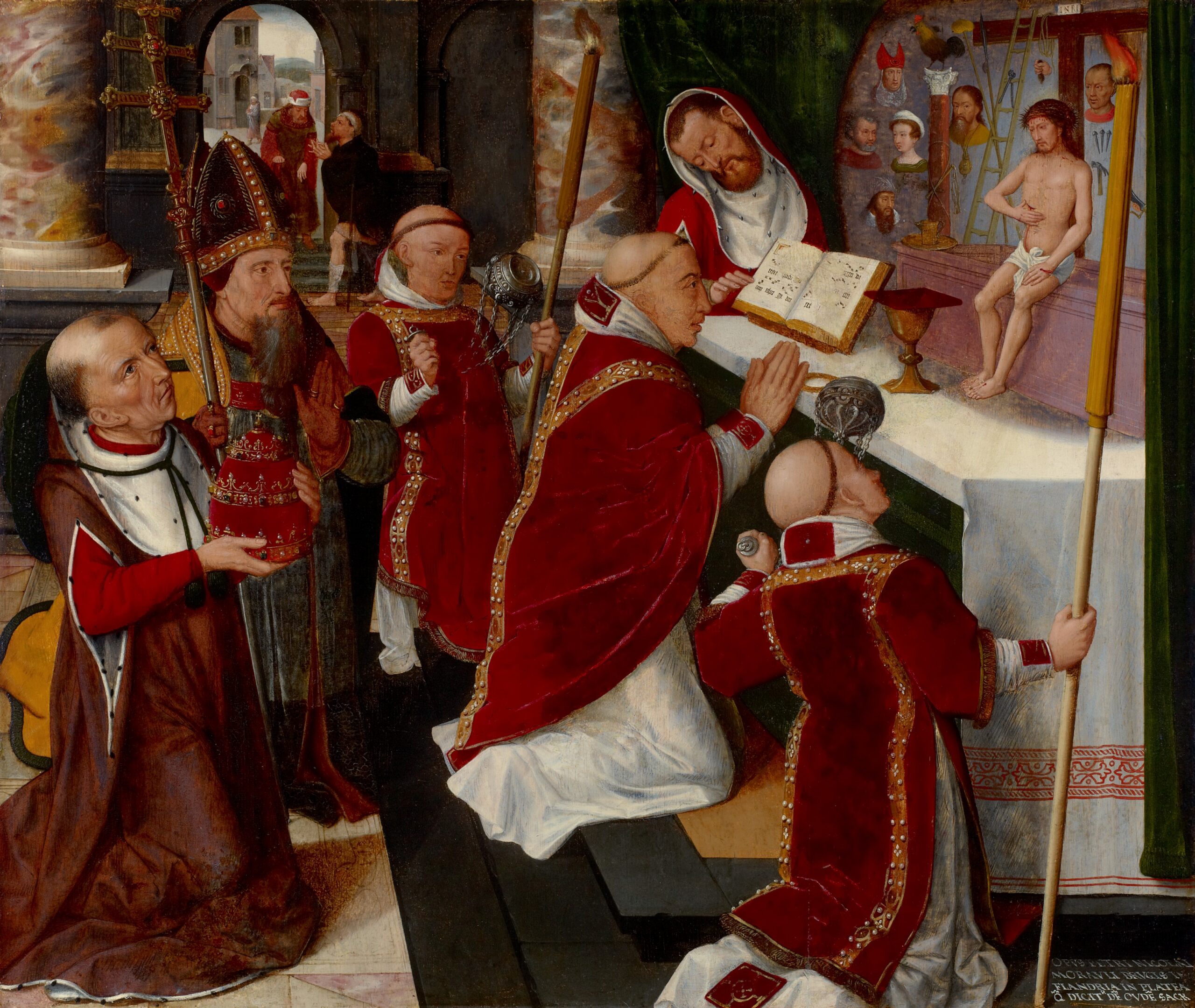
While the words, “Through Him, and with Him, and in Him,” are being pronounced, the Host is held above the chalice, and, the sign of the cross is made with the Host over the chalice of the Blood. By this is symbolized that death has been definitively overcome by Christ, and life restored, and everlasting glory bestowed.
The closing words of the doxology, “for ever and ever,” are spoken by the priest in a loud and clear voice, and the chalice and Host are both elevated above the altar, with the Host being held above the chalice. This action signifies how the sadness of the apostles over the death of the Lord was dispelled from their hearts when the wonderful news of the Resurrection was first announced to them.
Next follows an invitation to prayer, with the word “Oremus.” It continues thus:
At the Savior’s command
and formed by divine teaching,
we dare to say:
Our Father. . . .
Thus it is that, strengthened by the mercy of God, we arise from the dark death of sin. We do this with firm resolution and hope not to fall into it once again, just like Christ, Who “rising from the dead now dies no more.” May we flee from the horrible demon of sin, and turn to the mercy and sweetness of the Lord’s paternal mercy instead!
For God did not disdain to be known as “the Father of all” and “the Father of mercies and the God of all consolation.” And we are about to address God, the merciful Father, as “our Father.” We dare to do this, having been “formed by divine teaching.” It was the Son Himself Who taught this, Who is coequal with the Father. In instructing us to address His Father as “our Father,” He has bestowed upon us the dignity of being His brothers. He is the Son of God by nature; we are sons of God by divine grace. It is for this reason that we dare to say, “Our Father Who art in heaven.”
ooo
This article is taken from a chapter in Expositio Missae by St. Bonaventure which is available from TAN Books.