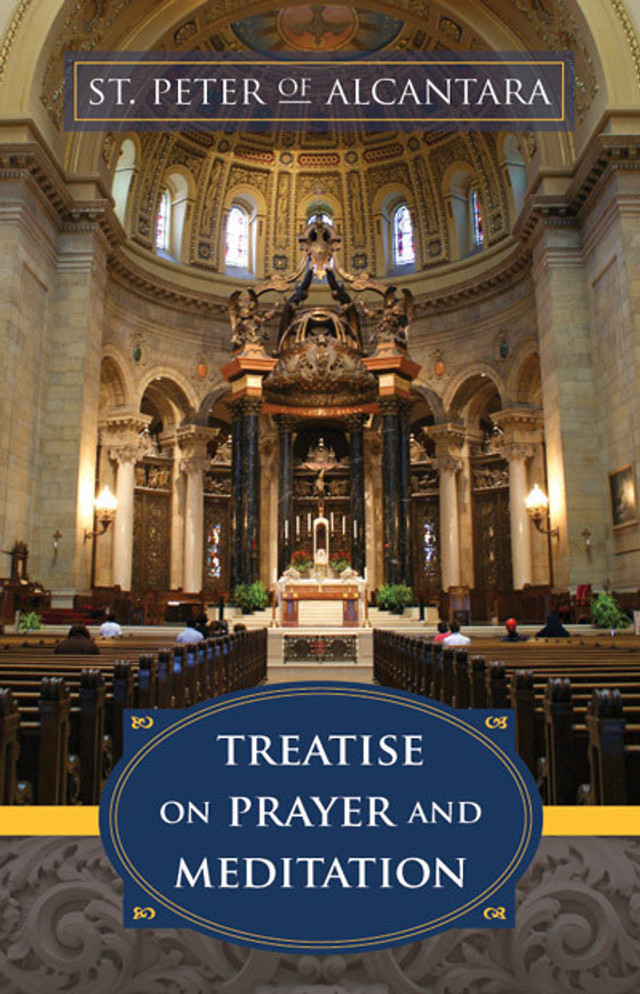

Saint Peter of Alcantara outlines nine practical means for fostering true devotion in prayer and meditation. These include guarding one’s heart and senses, cultivating solitude, perseverance, spiritual reading, and constant recollection of God. He emphasizes that devotion flourishes through interior discipline, bodily austerity, and acts of mercy—each drawing the soul closer to God through purity, focus, and love.
Many things contribute to devotion:
[1] A Steadfast Resolution
Firstly, it is very important to enter seriously and steadfastly upon these holy exercises and with a very resolute heart, ready for whatever may be necessary, however arduous and difficult, to secure this “Pearl of Great Price.” Certain it is that there is nothing great which is not at the same time difficult. So it is in this case, at least for beginners.
[2] Keep Guard Over the Heart
Keep guard also over the heart, banishing every kind of vain and idle thought, all alien emotions of love, all passionate and tempestuous movements. Clearly enough, these all impede devotion. Like the violin, if we would play on it, so also the heart, if we would pray and meditate, must be kept well tuned.
[3] Keep Watch Over the Senses
Keep watch also over the senses, especially the eyes, the ears and the tongue, for through the lips is the heart scattered, and by eyes and ears is it filled with varied imaginings and with much that disturbs the peace and repose of the soul. Hence has it been truly said that the contemplative soul should be as one deaf, blind and dumb, for the less he dissipates his energies abroad, the more will he be recollected within himself.
[4] Inclination Toward Solitude
For the same reason, incline toward a solitary life, for not merely does it remove from the senses occasions of distraction and from the heart occasions of sin, but it also invites a man to enter more into himself and to occupy himself alone with God, for to this one is indeed much drawn by circumstances of place, when no alien company finds admittance there.
[5] Spiritual Reading
Then, make a practice of reading spiritual and devout books. They serve to feed the imagination and to keep the heart recollected, and they lead men of good will to occupy their minds with what has appealed to them, for what the heart is full of is always the first to suggest itself to the mind.
[6] Keep the Thought of God Before You
Keep the thought of God continually before you, and walk always in His presence. Make use of those short prayers which St. Augustine calls “ejaculations”; they guard the mansion of the heart and maintain, as we have said above, the warmth of devotion. Thus is a man ready at any moment to give himself to prayer. This is one of the most essential principles of a spiritual life and among the best resources for such [people] as have neither time nor opportunity for fixed prayer; and anyone who bears this counsel in mind and puts it into practice will make great progress in quite a short time.
[7] Continuity and Perseverance
Add to this, continuity and perseverance in these holy exercises at the time and place fixed, especially night and morning, which, as all Holy Scripture teaches us, are the most suitable for prayer.
[8] Austerity and Abstinence
Practice some austerity and bodily abstinence, a poor table, a hard bed, a hairshirt and a discipline, and such-like. These things result from devotion and also contribute to it, preserving and strengthening the root from which they spring. (Cf. The Exercises of St. Ignatius: Addition, 10).
[9] Works of Mercy
Lastly, practice works of mercy. In our own sufferings, they give us confidence before God; they contribute much to the value of our prayers, which can no longer be called mere arid petitions, and they secure for them a reception full of mercy, seeing that they themselves proceed from a merciful heart.
ooo
This article is taken from a chapter in Treatise on Prayer and Meditation by Saint Peter of Alcantara which is available from TAN Books.