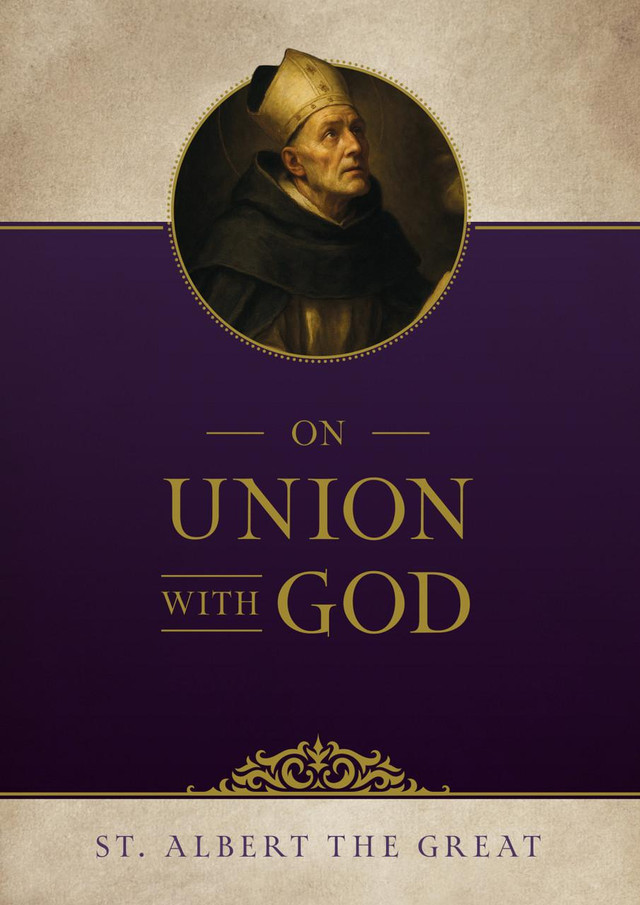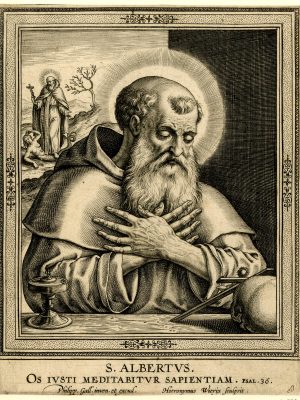
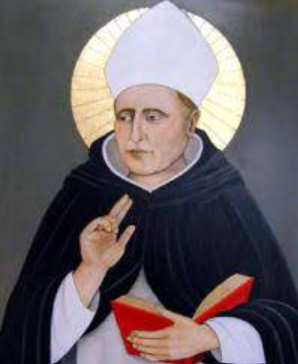
In this timeless reflection, Saint Albert the Great lays out the soul’s journey to perfect union with God through charity, silence, and detachment from the world. He shows how true Christian perfection means stripping away all that hinders us from clinging to Christ alone. May these words guide us to pray more purely and live more fully for God.
Of the Highest Perfection Which Man Can Attain Unto in This Life
I have felt moved to write a few last thoughts describing, as far as one may in this waiting-time of our exile and pilgrimage, the entire separation of the soul from all earthly things and its close, unfettered union with God.
I have been the more urged to this, because Christian perfection has no other end but charity, which unites us to God.
This union of charity is essential for salvation, since it consists in the practice of the precepts and in conformity to the Divine will. Hence it separates us from whatever would war against the essence and habit of charity, such as mortal sin.
But religious, the more easily to attain to God, their last end, have gone beyond this, and have bound themselves by vow to evangelical perfection, to that which is voluntary and of counsel. With the help of these vows they cut off all that might impede the fervour of their love or hinder them in their flight to God. They have, therefore, by the vow of their religious profession, renounced all things, whether pertaining to soul or body. God is in truth a Spirit, and “they that adore Him must adore Him in spirit and in truth,” that is, with a knowledge and love, an intelligence and will purified from every phantom of earth.
Hence it is written: “When thou shalt pray, enter into thy chamber”—i.e., into the inmost abode of thy heart—and, “having shut the door” of thy senses, with a pure heart, a free conscience and an unfeigned faith, “pray to thy Father” in spirit and in truth, in the “secret” of thy soul.
Then only will a man attain to this ideal, when he has despoiled and stripped himself of all else; when, wholly recollected within himself, he has hidden from and forgotten the whole world, that he may abide in silence in the presence of Jesus Christ. There, in solitude of soul, with loving confidence he makes known his desires to God. With all the intensity of his love he pours forth his heart before Him, in sincerity and truth, until he loses himself in God. Then is his heart enlarged, inflamed, and melted in him, yea, even in its inmost depths.
How a Man May Despise All Things and Cleave to Christ Alone
Whosoever thou art who longest to enter upon this happy state or seekest to direct thither thy steps, thus it behoveth thee to act.
First, close, as it were, thine eyes, and bar the doors of thy senses. Suffer not anything to entangle thy soul, nor permit any care or trouble to penetrate within it.
Shake off all earthly things, counting them useless, noxious, and hurtful to thee.
When thou hast done this, enter wholly within thyself, and fix thy gaze upon thy wounded Jesus, and upon Him alone. Strive with all thy powers, unwearyingly, to reach God through Himself, that is, through God made Man, that thou mayest attain to the knowledge of His Divinity through the wounds of His Sacred Humanity.
In all simplicity and confidence abandon thyself and whatever concerns thee without reserve to God’s unfailing Providence, according to the teaching of St. Peter: “Casting all your care upon Him,” Who can do all things. And again it is written: “Be nothing solicitous”; “Cast thy care upon the Lord and He shall sustain thee”; “It is good for me to adhere to my God”; “I set the Lord always in my sight”; “I found Him Whom my soul loveth”; and “Now all good things came to me” together with Him. This is the hidden and heavenly treasure, the precious pearl, which is to be preferred before all. This it is that we must seek with humble confidence and untiring effort, yet in silence and peace.
It must be sought with a brave heart, even though its price be the loss of bodily comfort, of esteem, and of honour.
Lacking this, what doth it profit a religious if he “gain the whole world, and suffer the loss of his own soul?”. Of what value are the religious state, the holiness of our profession, the shaven head, the outward signs of a life of abnegation, if we lack the spirit of humility and truth, in which Christ dwells by faith and love? St. Luke says: “The kingdom of God,” that is, Christ, “is within you.”
ooo
This article is taken from a chapter in On Union with God by Saint Albert the Great, OP which is available from TAN Books.