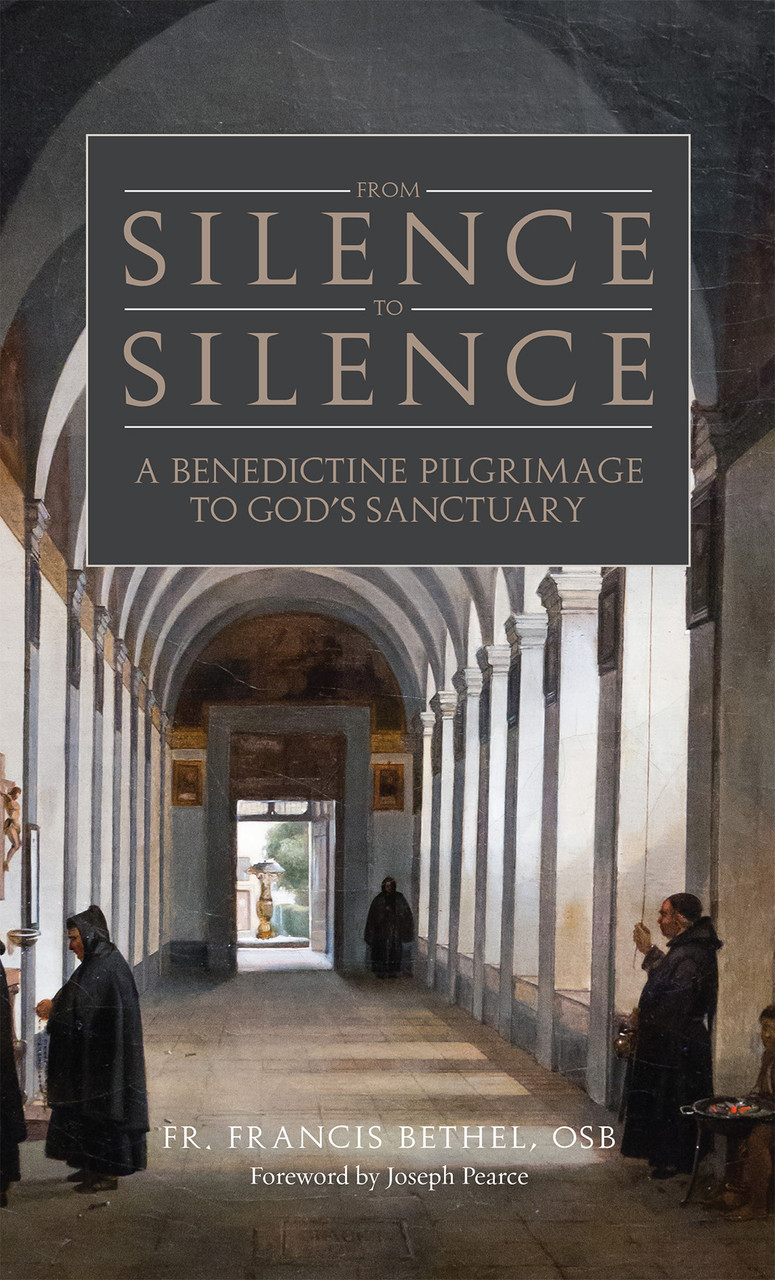
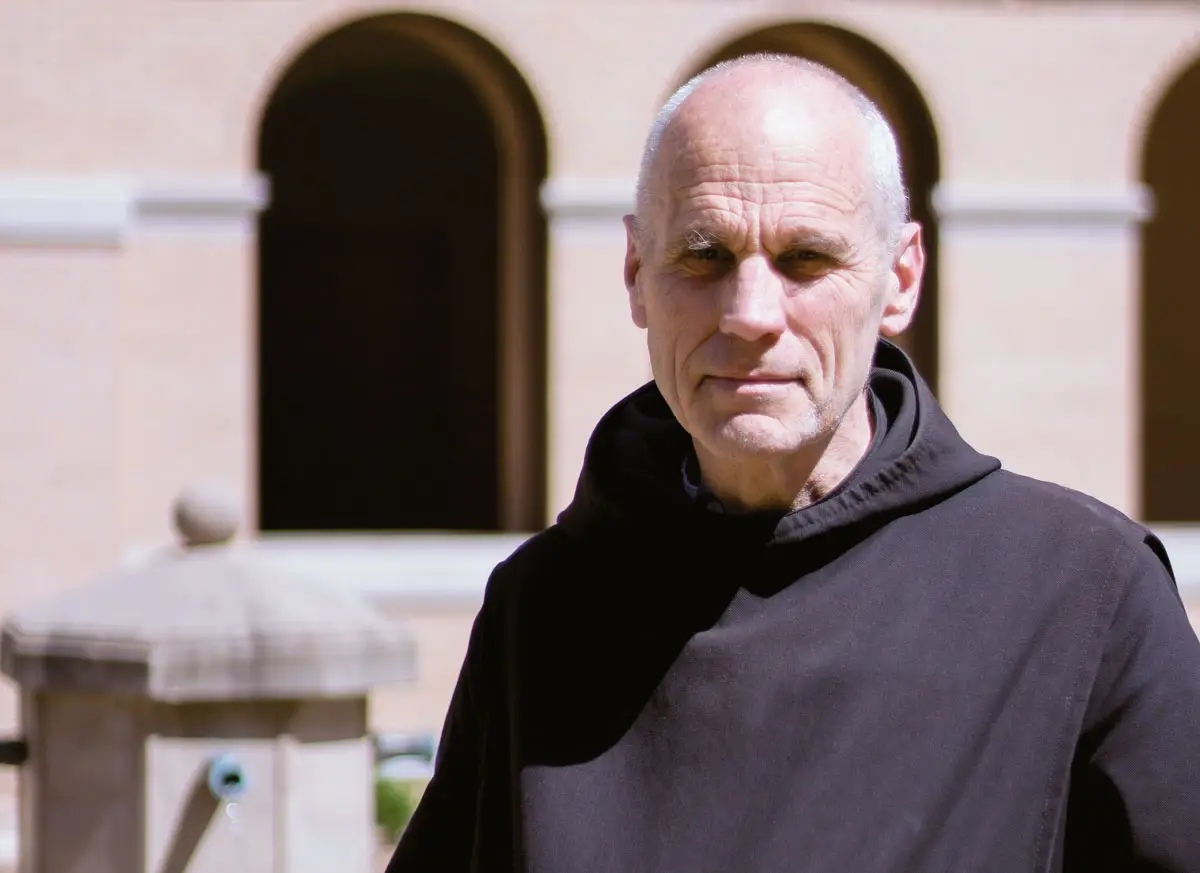
What is the purpose of speech? How do we imitate God’s perfect word and perfect silence? Read this excerpt from Fr. Francis Bethel’s From Silence to Silence.
Why Humans Use Language
Man, in his deepest mystery, is intimately linked to the word. He is the animal that speaks. It is amazing how children pick up the complex phenomenon of language as spontaneously as they learn to walk.
Animals communicate only through very limited and automatic emotional reactions. A human being, on the contrary, has a deliberate, definite message to get across. The baby, as also the little puppy, cries when it is hungry or angry, but one day the child is able to precisely recognize and express what he wants.
He intentionally reflects on the impressions received and forms a concept of reality and then transmits his idea through sounds: “I am hungry; I would like a sandwich.”
Through language, we enter into a culture, into an already accomplished assimilation of reality. It is when he begins to speak and understand others’ speech that a human being is launched into human life and flies far ahead of animals. All our culture and education, all our social life depend on language.
How Speech Is Spiritual
Man’s capacity to speak is based on the fact that he is a spiritual being and so is present to himself, penetrates himself. He possesses a treasure in the memory of what he has experienced, of what he has felt and imagined, what he has read or heard, as well as of his own reflections.
Because of his presence to self, he is able to grasp what is in him and express it first to himself in an idea or an interior word. He poses it before himself to consider it, draw out aspects, and link them to other objects.
He can eventually communicate what he has discovered to others in an exterior word. Articulating his thought in a sensible word also helps the actualization of his silence. In expressing his thought, he takes possession of it.
The Word
This personal expression, furthermore, allows us to enter into relationships with other people. We are able to articulate to others our thoughts and also our affections.
Louis Lavelle wrote: “The word is a miraculous path between two beings who until then were closed up in fear and distrust, and who all of a sudden discover one another. Language reveals each one to the other; words touch us because they give us the presence of the other.”
We rejoice when we together recognize a truth, aspire to a good, admire the beautiful.
The Limits of Human Expression
Man, nevertheless, develops ideas and words only laboriously. He slowly and gradually draws forth what he has received and can never completely expound the content of his memory. He cannot bring out all of the treasures into ideas and words.
This limitation comes partly from the fact that man is not pure spirit but an incarnate being and so is not perfectly present to himself. The angel, a pure spirit, on the contrary, immediately perceives and expresses an adequate idea of himself. He can draw out all the possible objects in him.
Silence
It is not only the fact that the aspects of reality are indefinite that renders man incapable of exhausting the riches of his memory. There is also something present in him that leads beyond himself.
We know a plant; we recognize the laws of its operations, but there is a silence in its depths, the mystery of growth, of life, of being, of beauty. In all things, man finds a door opening to mystery, in which the object of his consideration only participates.
To totally know the plant, we must go beyond it. We can learn about the mystery present to us, but we will never dominate it. It constitutes a domain of silence for us.
Even for the angel, there is a silence, a zone of mystery beyond his idea. The things he knows also point farther. The angel, too, only takes part in being, and thus, cannot express all being. His word is not absolute.
God’s Perfect Word and Perfect Silence
God alone expresses absolute being. His eternal Word is adequate to His silence. Max Picard evokes how God is perfect silence and absolute Word, as He is perfect repose and absolute act:
“The silence of God is different from the silence of men. It is not opposed to the word: word and silence are one in God. Just as language constitutes the nature of man, so silence is the nature of God; but in that nature . . . everything is word and silence at the same time.”
God’s eternal Word is the perfect expression of the Father, and so also of all being and perfections. He is the perfect unfolding of God’s silence. God is absolutely one in this perfect, eternal, lucid, joyful possession of Himself in His Word.
Angels and men are in the image of God, are in relation to His Word, and in their imperfect words, they endeavor to imitate this absolute Word. Our word is an incomplete, limited manifestation of the Word. God Himself said an imperfect word when He created the universe. We discover this limited word of God inscribed in things, and we learn, little by little, to articulate a finite echo of His Word. Our words can and should advance us in the path from our interior receptive silence to the Word, to God’s full silence.
ooo
This article is taken from a chapter in From Silence to Silence by Fr. Francis Bethel, OSB which is available from TAN Books.