Christ specifically asks us to imitate His Heart in its humility and meekness. This is no accident, for humility is the queen of virtues and absolutely necessary for our acceptance of God’s love, graces, and salvation.
The Ultimate Humility
Humility is a virtue that belongs essentially to Christ, not only as man, but more especially as God, because with God, to be good, holy and merciful is not virtue, but nature; and humility is only a virtue. God cannot exalt Himself above what He is in His most high Being, nor can He increase His vast and infinite greatness; but He can humble Himself, as in fact He did humble and lower Himself. “He humbled Himself, He emptied Himself” (Phil. 2:7, 8), revealing Himself to us, through His humility, as the Lord of all virtues, the conqueror of the world, of death, of Hell and of sin.
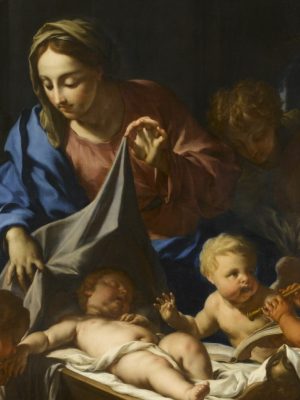
No greater example of humility can be given than that of the Only Son of God when “the Word was made Flesh.” Nothing could be more sublime than the words of St. John’s Gospel, “In the beginning was the Word.” And no abasement can be deeper than that which follows: “And the Word was made Flesh.” By this union of the Creator with the creature, the Highest was united with the lowest. Jesus Christ summed up all His heavenly doctrine in humility, and before teaching it, it was His Will to practice it perfectly Himself. As St. Augustine says: “He was unwilling to teach what He Himself was not, He was unwilling to command what He Himself did not practice.”
We Must Truly Imitate Him
But to what purpose did He do all this, if not that by this means all His followers should learn humility by practical example? He is our Master, and we are His disciples; but what profit do we derive from His teachings, which are practical and not theoretical?
How shameful it would be for anyone, after studying for many years in a school of art or science, under the teaching of excellent masters, if he were still to remain absolutely ignorant! My shame is great indeed, because I have lived so many years in the school of Jesus Christ, and yet I have learned nothing of that holy humility which He sought so earnestly to teach me. “Have mercy upon me according to Thy Word. Thou art good, and in Thy goodness teach me Thy justifications. Give me understanding, and I will learn Thy commandments.” (Ps. 118:58, 68, 73).
Humility Is Necessary for Salvation
There is a kind of humility which is of counsel and of perfection, such as that which desires and seeks the contempt of others; but there is also a humility which is of necessity and of precept, without which, says Christ, we cannot enter into the kingdom of Heaven: “You shall not enter into the kingdom of Heaven.” (Matt. 18:3). And this consists in not esteeming ourselves and in not wishing to be esteemed by others above what we really are.
No one can deny this truth, that humility is essential to all those who wish to be saved. “No one reaches the kingdom of Heaven except by humility,” says St. Augustine.
How Can We Know If We Possess Humility?
But practically speaking, I ask, what is this humility which is so necessary? When we are told that faith and hope are necessary, it is also explained to us in what we are to believe and to hope. In like manner, when humility is said to be necessary, in what should its practice consist, except in the lowest opinion of ourselves?
It is in this moral sense that the humility of the heart has been explained by the Fathers of the Church. But can I say with truth that I possess this humility, which I recognize as necessary and obligatory? What care or solicitude do I display to acquire it? When a virtue is of precept [i.e., commanded], so is its practice also, as St. Thomas teaches. And therefore, as there is a humility which is of precept, “it has its rule in the mind, viz., that one is not to esteem himself to be above that which he really is.”
How and when do I practice its acts, acknowledging and confessing my unworthiness before God? The following was the frequent prayer of St. Augustine, Noscam Te, noscam me—“May I know Thee; may I know myself!” And by this prayer he asked for humility, which is nothing else but a true knowledge of God and of oneself. To confess that God is what He is, the Omnipotent, “Great is the Lord, and exceedingly to be praised” (Ps. 47:1), and to declare that we are but nothingness before Him: “My substance is as nothing before Thee.” (Ps. 38:6)—this is to be humble.
ooo
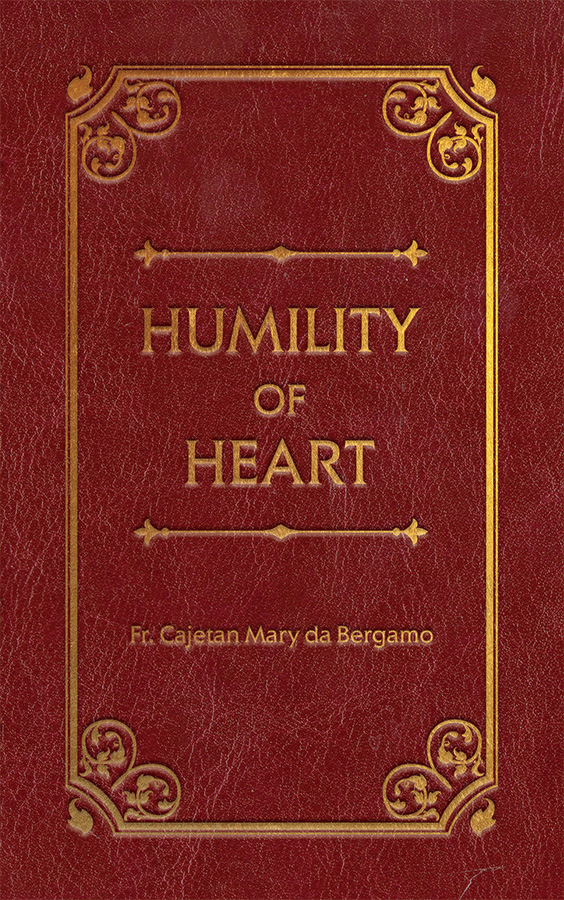
This article is taken from a chapter in Humility of Heart by Fr. Cajetan Mary da Bergamo which is available from TAN Books.