Why do we celebrate Mary’s Immaculate Conception? How was this dogma developed? Read on in this excerpt from Advent and Christmas with the Church Fathers.
The Christian calendar normally celebrates the day a saint dies as his or her “birthday” into heaven. That is, the Church usually and prudently waits for a person to have lived the entirety of his or her life on earth before officially declaring that person a saint. But there are three natural birthdays to be celebrated for those who are clearly holy from their beginning, living their entire lives in union with God—John the Baptist on June 24 (six months before Christ’s birth, cf. Lk 1:26, and fittingly as John “decreases” similarly to the days following the summer solstice, cf. Jn 3:30), of course Jesus on December 25 (who is not a saint but the cause of sanctity itself), and Mary on September 8. When the decision was made to proclaim the absolutely crucial conception of Mary, then, the Church backed up nine months to mark her birthday, making December 8 the day of this celebration.
While there are no canonical Scriptures mentioning Mary’s birth, it is found in other very early extra-biblical texts, giving us the names of Anne and Joachim as her parents and describing Our Lady’s early life. The liturgical celebration of Mary’s conception and birth most likely originated in Jerusalem as early as the fifth century, with more and more attention being paid to Mary after the Council of Ephesus legitimized her title “Mother of God” in 431. Since September 1 marked a new beginning to the calendar year in the East, some historians have argued that September 8 was chosen as Mary’s birthday as a sign of how God likewise begins anew. Her immaculate presence marks the inauguration of an entirely new order, and by 1007, the celebration of Mary’s birthday had become a universal feast in both the East and the West.
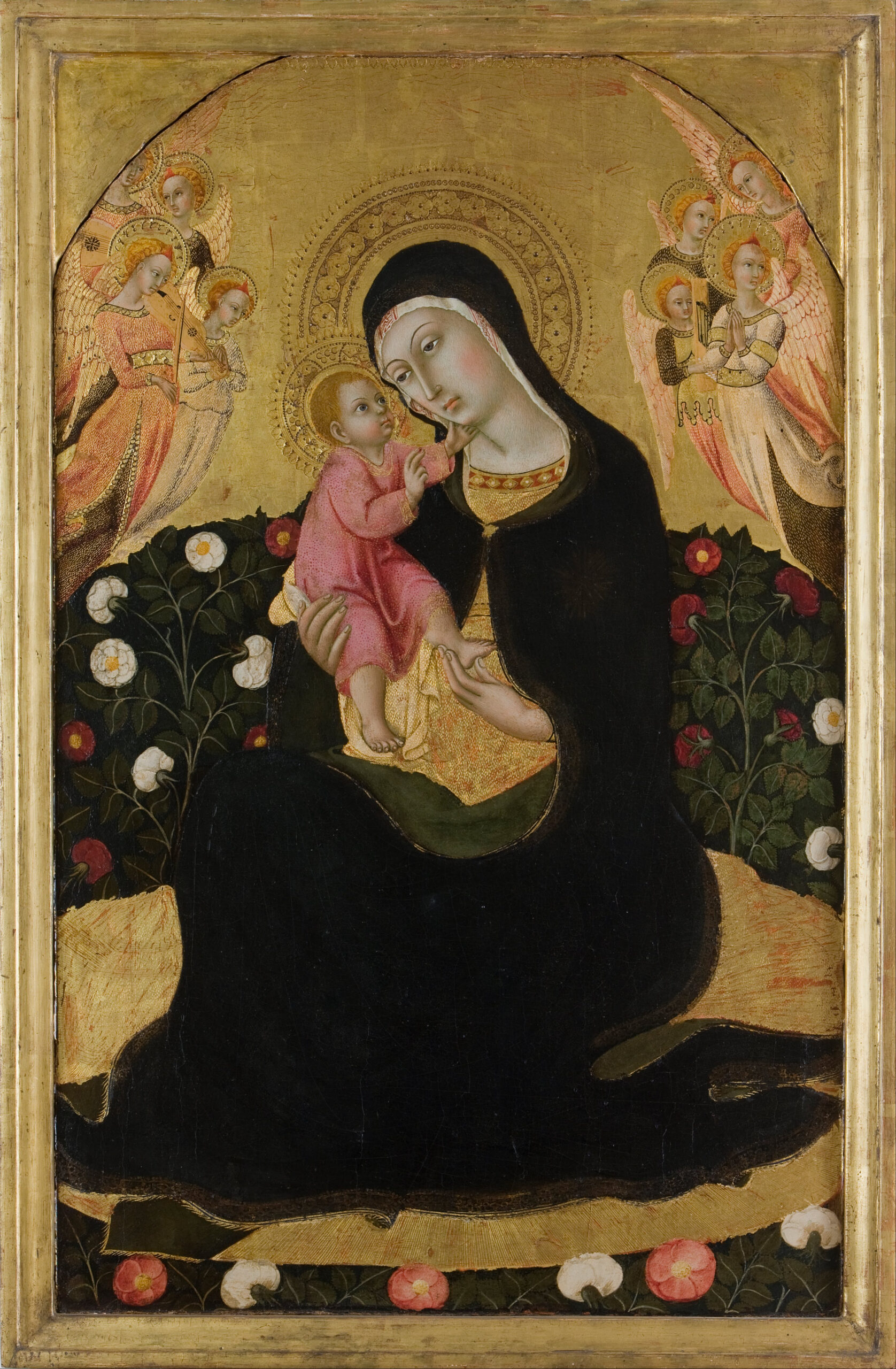
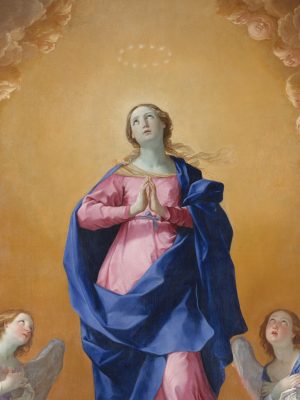
After much medieval reflection and, at times, severe debate, Pope Pius IX (d. 1878) issued his Apostolic Constitution on December 8, 1854, thereby declaring Mary’s conception to be free from any taint of original sin through the grace of God. In this way, God preserved a new Eve from whom His Son would join all of humanity back to Himself, thus giving the human race a new opportunity to be rescued from sin and death and thus be joined back to God Himself. Pope Pius wrote:
We declare, pronounce, and define that the doctrine which holds that the most Blessed Virgin Mary, in the first instance of her conception, by a singular grace and privilege granted by Almighty God, in view of the merits of Jesus Christ, the Savior of the human race, was preserved free from all stain of original sin, is a doctrine revealed by God and therefore to be believed firmly and constantly by all the faithful. . . .
Let all the children of the Catholic Church, who are so very dear to us, hear these words of ours. With a still more ardent zeal for piety, religion and love, let them continue to venerate, invoke and pray to the most Blessed Virgin Mary, Mother of God, conceived without original sin. Let them fly with utter confidence to this most sweet Mother of mercy and grace in all dangers, difficulties, needs, doubts and fears. Under her guidance, under her patronage, under her kindness and protection, nothing is to be feared; nothing is hopeless. Because, while bearing toward us a truly motherly affection and having in her care the work of our salvation, she is solicitous about the whole human race. And since she has been appointed by God to be the Queen of heaven and earth, and is exalted above all the choirs of angels and saints, and even stands at the right hand of her only-begotten Son, Jesus Christ our Lord, she presents our petitions in a most efficacious manner. What she asks, she obtains. Her pleas can never be unheard.
As a member of the human race, even Mary the Queen is saved by God’s grace (just from the moment of her conception). He is, of course, her savior, and she rightly acknowledges Him as such: “And Mary said: ‘My soul proclaims the greatness of the Lord; my spirit rejoices in God my savior’” (Lk 1:46–47). The theology here is the fittingness that if the Son of God was going to unite Himself to each and every human, He needed to receive that humanity from an unsullied and thus universal source. At the start, this is what the first Eve was for the human race on the natural level, and this is what Mary, the New Eve, is on the supernatural today. “When Jesus saw his mother and the disciple there whom he loved, he said to his mother, ‘Woman, behold, your son.’ Then he said to the disciple, ‘Behold, your mother.’ And from that hour the disciple took her into his home” (Jn 19:26–27).
ooo
This article is taken from a chapter in Advent and Christmas with the Church Fathers by TAN Books which is available from TAN Books.