
Opening Prayer
O Mother of Sorrows, Fount of Love, we stand in spirit beside thee at the foot of that Cross where the mercy of God celebrated its most sublime triumph. We venerate the heroic fortitude with which thou didst suppress thy violent grief, remaining wholly conformed to the Divine Will as the sword of sorrow transfixed thy soul. Thou didst share in every stripe and insult offered to thy Divine Son, offering His unblemished sacrifice for the redemption of the world.
Holy Mother, we petition for the grace to accompany thee in thy grief with a heart that truly melts in compassion. Touch our spirits from above and make our hearts accord with thine, that we may never grow indifferent to the magnitude of thy suffering. Grant us the constancy to remain close to Jesus and to thee, that through thy maternal tears, we may find the path to eternal contrition.
Amen.

Hebrews 5:7-9
7Who in the days of his flesh, with a strong cry and tears, offering up prayers and supplications to him that was able to save him from death, was heard for his reverence. 8And whereas indeed he was the Son of God, he learned obedience by the things which he suffered: 9And being consummated, he became, to all that obey him, the cause of eternal salvation.

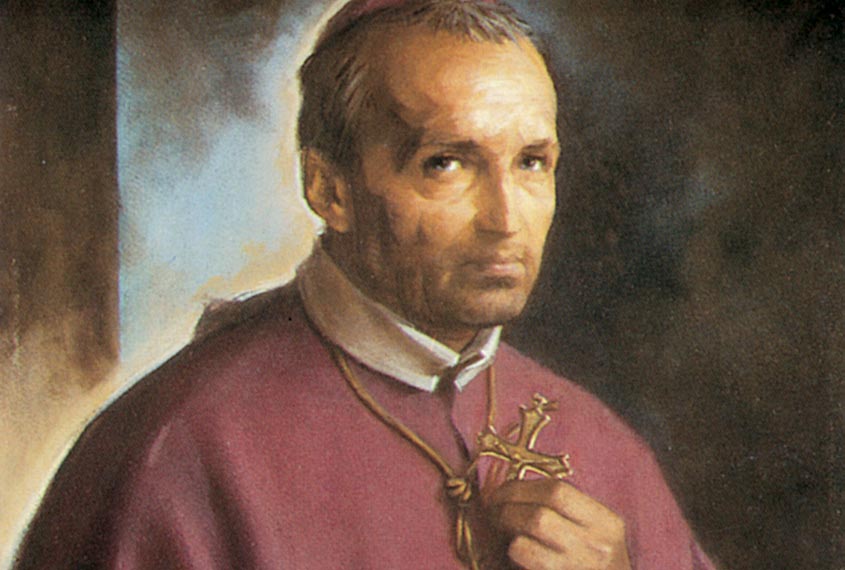
St. Alphonsus Liguori
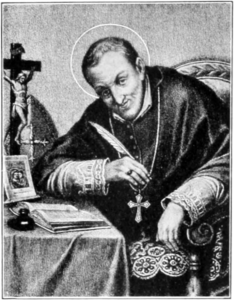
St. Alphonsus Liguori, a doctor of the Church and tireless proponent of this devotion, asserts the profound reality that “Two hung upon one Cross.” While Christ suffered the dissolution of His Body, the Queen of Sorrows endured the crucifixion of her soul. This complete conformity to the Divine Will transformed her maternal anguish into a redemptive oblation. In the mystical Dialogue between the Blessed Virgin and St. Anselm, we learn details of the Passion’s onset that illuminate the depths of this sorrow. Mary reveals that the thirty pieces of silver accepted by Judas were no ordinary coins, but the Ishmaelite silver pieces used to sell Joseph into slavery two thousand years prior—treasures of the temple used to purchase the Blood of God. Every such detail was known to Mary in advance, augmenting her internal martyrdom through a perfect, agonizing foresight.

In a poignant revelation to St. Bridget, the Mother of God lamented her search for compassion among the “children of men,” finding so few who truly sympathize with her. She addresses each soul with a direct, personal appeal: “If many forget me, at least you, my daughter, do not forget me.” This is not a suggestion but a maternal mandate. The “so what?” of this devotion is the recognition of a personal obligation to console her pierced heart. Our sympathy is a debt of justice; by meditating on her dolors, we fulfill a request from our Queen to be remembered, thereby moving the Heart of the Savior who is most sensitive to the honor shown to His Mother.
“O thou Mother, Fount of love! / Touch my spirit from above, / Make my heart with thine accord.”
— Stabat Mater
Mary and the Magisterium
The Magisterium has formally sanctioned this devotion by elevating it into the Missal and Breviary, transitioning the meditation on the “Seven Sorrows” from a private piety to a formal ecclesiastical feast. The Church spares no effort to induce her children to venerate these mysteries, enriching the Rosary of the Seven Dolors with numerous indulgences. By intertwining the Stabat Mater with the public Way of the Cross, the Church confirms that Mary’s interior martyrdom is an essential component of the Faith, ensuring the Mother’s sufferings are perpetually kept before the eyes of the faithful.

- How does the concept of "Two hung upon one Cross" change your perception of Mary’s role in your personal redemption?
- In what specific ways can you "feel compassion" for Mary this week to answer her appeal to St. Bridget?
Closing Prayer
Dearest Mother, grant us the grace to remain close to Jesus to the last, even as thou didst keep thy station beneath the Cross.
Amen.