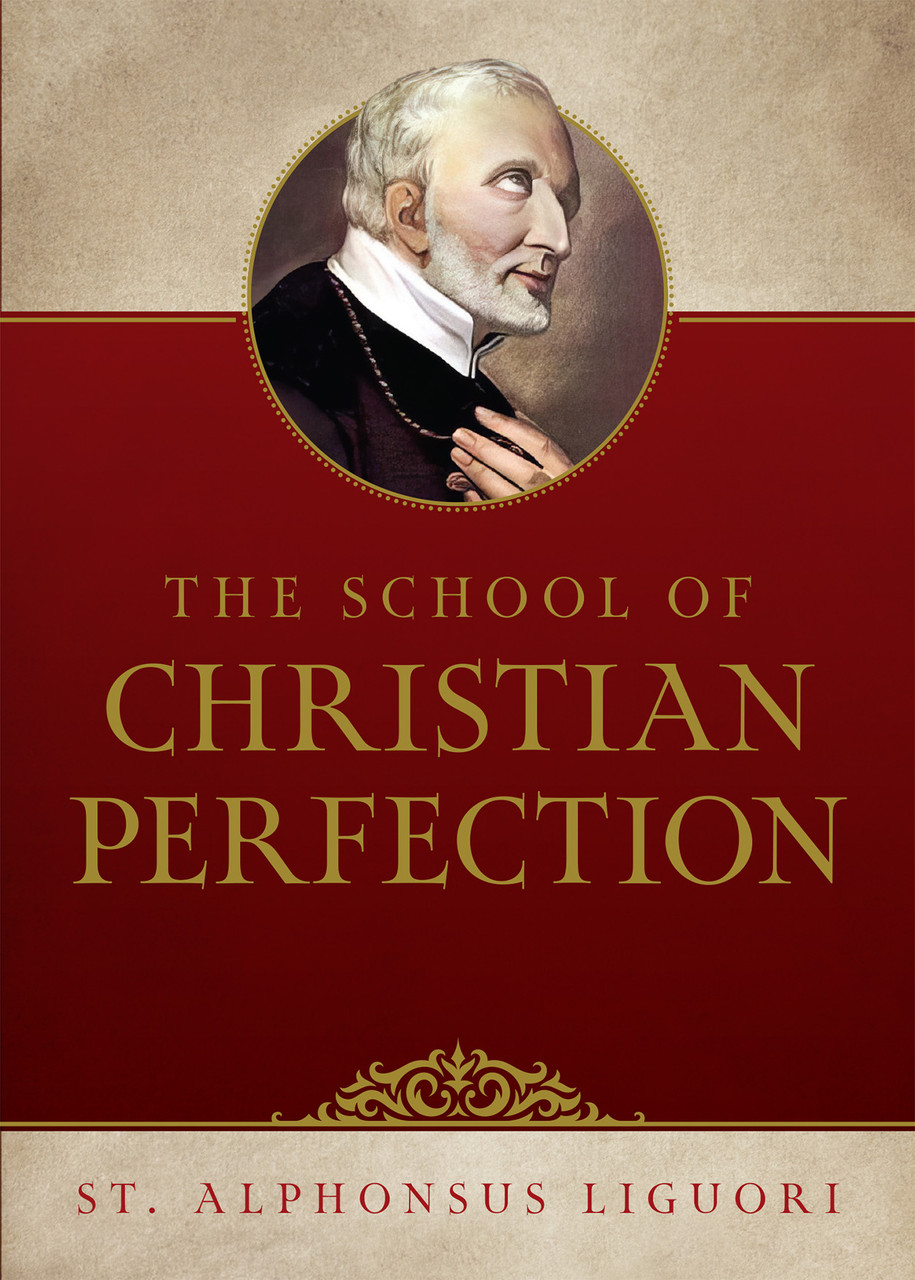
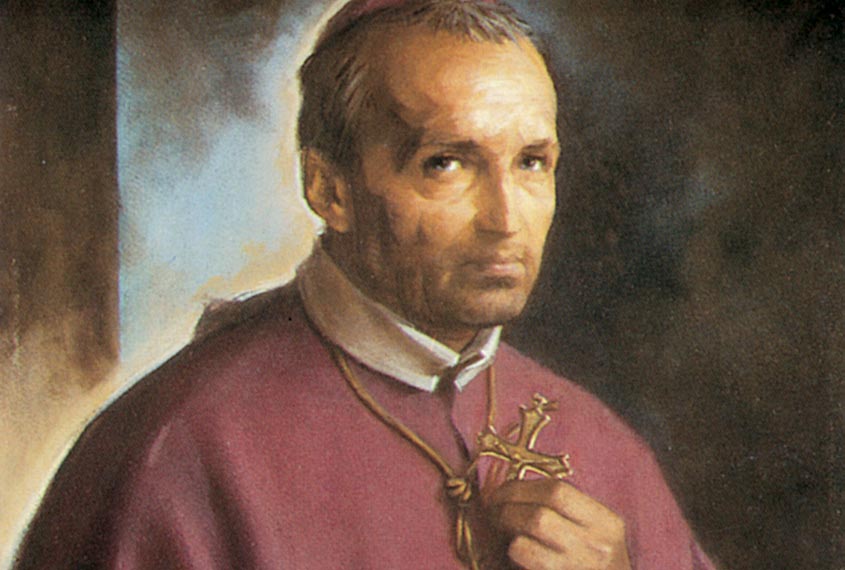
In this excerpt from School of Christian Perfection, St. Alphonsus Liguori explains that the greatest obstacle to holiness is not the world or the devil but our own inordinate self-love. Interior mortification — self-restraint and daily self-denial — is the true path to overcoming passions and uniting ourselves wholly to God.
The Twofold Love of Self
Interior mortification consists in restraining our inordinate self-love and self-will. There is a twofold love of self, the one good and the other bad. The former spurs us on to strive for eternal life, for which God has created us; the latter prompts us to seek for the good things of this earth, to the great detriment of our immortal soul. Christ Our Lord has said: “If any man will come after me, let him deny himself.” (Matt.16:24). Now, all the perfection of a soul consists in this very self-denial, for St. Augustine says, “The less one seeks to gratify the passions, the more one truly loves God, and when one desires nothing but God, one’s love of God is perfect.” In the present condition of our sinful nature, it is impossible to be entirely free from the promptings of self-love. Jesus Christ alone among men and the Blessed Virgin Mary among women were entirely exempt. As for all the other Saints, they have had to battle with their inordinate inclinations. Interior mortification, therefore, consists principally in restraining and keeping in check these inordinate inclinations of self-love. The soul has other enemies, it is true, but the worst enemy of all is self-love.
Self-Love: The Great Betrayer
According to St. Mary Magdalen de Pazzi, “Self-love is like the worm that gnaws at the root and destroys not only the fruit, but even the very life of the plant.” The same Saint adds: “The traitor that we have to fear most is self-love, for self-love betrays us as Judas betrayed Our Lord with a kiss. He who conquers self-love has conquered all.” Pray, therefore, without ceasing, to the Lord: O God, do not let me fall a prey to my passions, which rob me of Thy holy fear and of reason itself. “Man’s life on earth is a warfare.” (Job 7:1). He who encounters an enemy in battle must have his weapons in hand to defend himself; if he neglects to fight, he is lost. No matter how many victories we may have won, we cannot afford to lay down our arms; for our passions, in spite of repeated defeats, are never entirely destroyed.
They are like weeds, says St. Bernard, that crop out again as often as they are cut off; even when you think you have rooted them out entirely, they soon appear again. In the struggle with our passions, the most we can hope to attain is that their attacks become less frequent and less violent, and we ourselves better able to overcome them. One day a monk complained to the Abbot Theodore that he had fought for eight long years against his passions and had not as yet succeeded in subduing them. The Abbot replied: “My brother, you complain of a war of eight years; I have spent sixty years in solitude and there was not a single day of that time but I was disquieted by some passion or other.” The passions, therefore, will always molest us; but, as St. Gregory says, “It is a different thing to see these wild beasts prowling around us and to hear their ferocious howl than to have them in our very heart and to suffer them to strangle us.”
Self-Conquest: The Path to God
Our heart is a garden in which wild and noxious weeds continue to grow. We must therefore have the hoe of mortification always in hand to remove this noxious growth, otherwise the garden will soon be choked with thorns and thistles. “Overcome yourself,” was a favorite saying with St. Ignatius of Loyola. It was always on his lips; again and again he returned to it when addressing his religious brethren. “Overcome your self-love; break your self-will,” he would say. The reason why so few of those who practice mental prayer become saints is because so few are intent upon over-coming themselves. Of a hundred persons who practice mental prayer, more than ninety follow their own head. Therefore, the Saint placed greater value on a single act of self-denial than on a whole hour’s prayer filled with spiritual consolation. “Of what benefit is it to a fortress,” says the Abbot Gilbert, “that the gates are closed if hunger, the enemy within, lays low the occupants?” He wished to say: Of what use is it to mortify the exterior senses and perform many exercises of piety if we harbor some passion in our heart and refuse to give up our own will?
St. Francis Borgia said that prayer introduces the love of God into the heart, but mortification prepares the way by removing everything that might prove an obstacle or hindrance to it. If you wish to fill a vase with water you must first empty out the earth that is in it, otherwise there will be a disagreeable mixture. Regarding the relation of interior mortification to prayer, Father Balthasar Alvarez says: “Prayer without mortification is either a delusion, or will soon come to an end.” St. Ignatius tells us that a mortified soul is more intimately united to God in one quarter of an hour than an unmortified person in many hours of prayer. And if the Saint heard it said of anyone that he prayed much, he would add: “That is a sign that he is very mortified.”
ooo
This article is taken from a chapter in The School of Christian Perfection by Saint Alphonsus Liguori which is available from TAN Books.