The Grotto of Olivet and Adam’s Fall: Visionary Insights into the Agony in the Garden
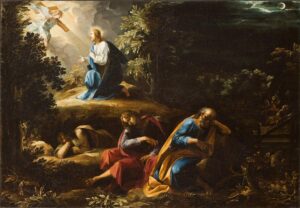
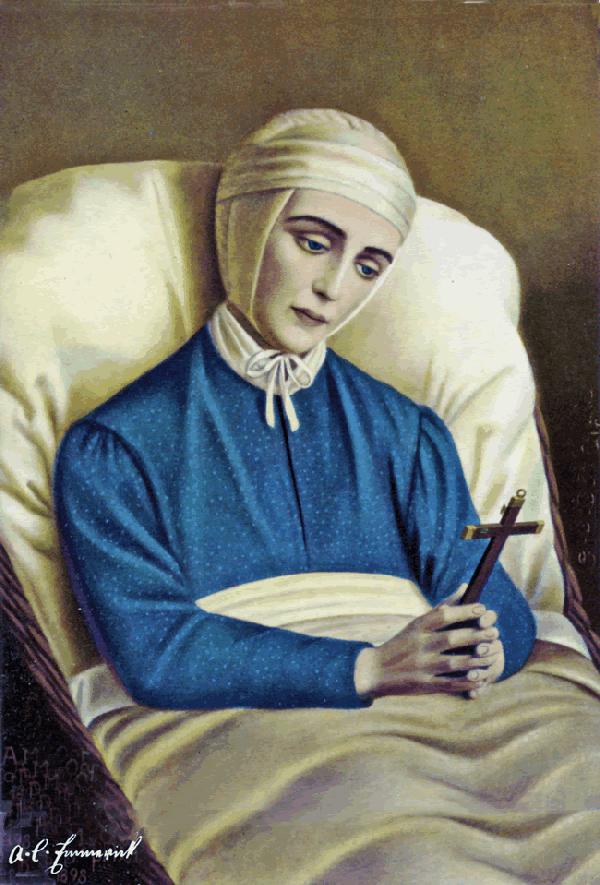
The First Sorrowful Mystery of the Rosary—The Agony in the Garden—opens the solemn narrative of Our Lord’s Passion. While the Gospels recount Jesus praying in Gethsemane as His sweat became like drops of blood, the private revelations of Blessed Anne Catherine Emmerich uncover profound historical and mystical connections, revealing how Christ’s agony in the dark cave directly answered the original Fall of mankin.
1. Entering Mount Olivet and the Six-Foot Grotto
After the Last Supper, Jesus and His Apostles crossed the brook Cedron by a quiet byway, making their way to Mount Olivet. Leaving eight of the Apostles in a leafy shelter at Gethsemane, Jesus took Peter, James, and John further up the mountain slope.
As overwhelming sorrow and frightful visions began to gather around Him like dense clouds, Jesus declared to the three: “My soul is sorrowful even unto death”. Turning to the left into a secluded hollow, He plunged down into a hidden grotto formed by overhanging rocks. This cave was about six feet deep, its floor sinking gently toward the back, with hanging plants and vines completely concealing its entrance from human eyes.
2. The Historical Connection to Adam and Eve
Inside the narrow grotto, Jesus fell upon His face as an overwhelming tide of visions encompassed Him—encompassing every sin, guilty pleasure, and just punishment from the Fall of our first parents until the end of the world.
Emmerich was shown the deep spiritual typology connecting this specific cave to Genesis:
- The Site of First Exile: It was upon Mount Olivet that Adam and Eve had first descended onto the inhospitable earth after being driven out of Paradise.
- The Cave of Weeping: In that exact six-foot grotto, Adam and Eve had sat in fear, bewailing their lost innocence and human misery.
Where the first Adam had brought sin into the world and wept in despair, the “Second Adam”—Jesus Christ—entered the same cave to embrace the full burden of human guilt and initiate our redemption.
3. The Agony of Christ’s Humanity and Satan’s Mockery
To make true satisfaction for sin through love, Jesus caused His Divinity to return into the Most Holy Trinity, leaving His most pure, innocent, and sensitive Humanity to bear the full weight of agony.
As Christ received the root of all human sins into His Sacred Heart, Satan appeared under a frightful form. Surrounding the cave with abominable visions, Satan mockingly taunted the Savior, asking: “Will You take this also upon Yourself? Are You ready to endure its penalty? How can You satisfy for this?”. The burden was so heavy that Jesus quivered in terror, His Heart shrinking under the crushing weight.
4. Angelic Consolation on the Path of Light
In the midst of this intense interior agony, a narrow pathway of light streamed down from the heavens into the dark grotto.
Along this beam of glory, a file of angels descended to minister to the Savior, imparting fresh strength and vigor to His exhausted human nature. Sustained by divine help, Jesus stood ready to embrace the chalice of His Passion for the salvation of the world.
5. Devotional Reflection: Praying for Contrition and Faith
In the Rosary meditations adapted from St. Louis de Montfort, the First Sorrowful Mystery is offered to petition for the gift of Faith and deep contrition:
“We offer You, O Lord Jesus, this first decade in honor of Your Agony in the Garden, and we ask of You, through this mystery and through Mary’s intercession, the gift of Faith. Amen.”
Contemplating Christ kneeling in the grotto of Adam’s tears inspires believers to offer their own trials in union with His Sacred Heart, trusting in the divine strength that comes through prayer.

The Agony in the Garden