
Opening Prayer
O Mother of Sorrows and Fount of Love, we invoke the mystical, liquefying power of thy tears, which flowed as a river of grace beneath the shadow of the Cross. As thou didst behold the lacerated flesh of thy Divine Son, thy heart became the most patient of altars, bearing a burden of grief that would have crushed the pillars of the world.
We petition thee this day to descend into the petrified corridors of our souls. As thy tears once washed the wounds of Christ clean and possessed such potency that they softened the very earth and marked the “ancient rock of Calvary,” let them now dissolve our pride and indifference. Melt the stony coldness that obstructs our path to thy Son, that we may be reconstructed as living stones in the temple of His mercy.
Amen.

Jeremiah 31:15, 9:1
15Thus saith the Lord: A voice was heard on high of lamentation, of mourning, and weeping, of Rachel weeping for her children, and refusing to be comforted for them, because they are not.
1Who will give water to my head, and a fountain of tears to my eyes? and I will weep day and night for the slain of the daughter of my people.

St. Januarius
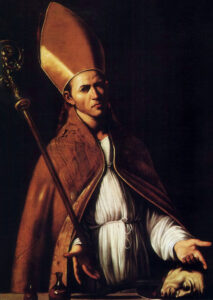
On this feast of St. Januarius, the Church gazes upon the miraculous liquefaction of the martyr’s blood—a celestial sign of life persisting in the wake of death. As Devotional Architects, we discern a profound parallel in the “liquefying power” of Mary’s tears. Her weeping was not a frail human lament, but a physical manifestation of her interior crucifixion. The Source Context reveals that her tears possessed a supernatural agency: they washed the Precious Blood from the goaded, spittle-covered, and lacerated body of Jesus, and their intensity was such that they permanently marked and softened the ancient rock of Calvary itself. Just as the martyr’s blood defies the stasis of death, Mary’s tears defy the hardness of the fallen world.

The magnitude of this grief is articulated by St. Bernardine of Siena, who asserted that Mary’s sorrow was so immense that, had it been partitioned among all mankind, it would have inflicted an immediate, “thousandfold death” upon the human race. Her martyrdom was an internal sea of bitterness, deeper than any physical torment. Furthermore, our Lady revealed to St. Bridget the isolation of her agony: “I gaze upon the children of men to see whether anyone feels compassion for me, and alas, I see but few!” She invites us to enter into that vast ocean of grief where natural maternal love and supernatural adoration were forged into a single act of sacrifice.
“At the cross her station keeping, / Stood the mournful Mother weeping, / Close to Jesus to the last.”
— From the Stabat Mater
Mary and the Magisterium
The Church “spares no pains” to induce a profound veneration of the Mother of Sorrows, recognizing that she is the Mother of our soul. This is strategically codified in the Magisterial elevation of the Feast of the Seven Dolors on September 15. Through the Missal and the Breviary, the Church intertwines the Stabat Mater with the Way of the Cross, ensuring that the faithful never separate the Victim of Calvary from the Queen of Martyrs. Numerous indulgences are attached to the Rosary of the Seven Dolors, signaling its central role in the liturgical and spiritual life of the household of faith.

- Discern the "petrified corridors" of your soul—those areas of chronic habit or cold indifference where the liquefying grace of Mary’s tears has not yet been allowed to penetrate.
- Mary lamented to St. Bridget that few feel compassion for her. How can you offer her this requested compassion amidst the "virulent derisions" of your daily life?
Closing Prayer
O thou Mother, Fount of love! Touch my spirit from above, make my heart with thine accord.
Amen.