Opening Prayer
Most Valiant Queen of Martyrs, we venerate thy “refuse-to-hide fortitude” as thou didst navigate the narrow and crowded road to the heights of Golgotha. While the disciples scattered like dust, thou didst stand as the immovable pillar of the internal temple, facing the cruel spectacle of thy Son’s humiliation with an unyielding heart.
We petition thee for the valiant strength required to endure the virulent derisions of the secular theater. Grant us the courage to emerge from our “side paths” of comfort and ease, that we may meet Christ publicly, bearing our own crosses with the same heroic resignation that sustained thee as thou beheld His martyrdom of the eyes.
Amen.

2 Corinthians 4:8–10
8In all things we suffer tribulation, but are not distressed; we are straitened, but are not destitute; 9We suffer persecution, but are not forsaken; we are cast down, but we perish not: 10Always bearing about in our body the mortification of Jesus, that the life also of Jesus may be made manifest in our bodies.

St. Andrew Kim Taegon
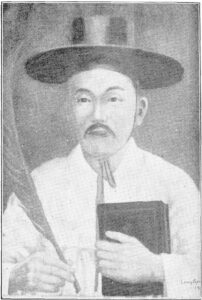
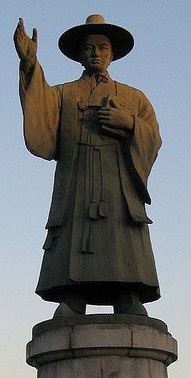
Today we honor St. Andrew Kim Taegon and the Korean martyrs, whose bravery in the face of public execution mirrors the Fourth Sorrow. Mary, hearing of the death sentence, did not retreat but sought her Son. The gospel describes how she took a “side path” to intercept the procession, avoiding the primary road only to better witness the horror. There, she beheld Him “goaded by heartless executioners,” His virginal flesh writhe and quiver under the weight of the Cross, His face disfigured by spittle and blood. This was her “martyrdom of the eyes“—to see her Son, the King of Heaven, treated as a common criminal and sinking under the wood of our sins.

Richard of St. Victor provides the theological keystone for this sorrow: “the more she loved, the more she suffered.” For other martyrs, the flames of divine love cooled the fires of their torture, but for Mary, love was the fuel of the flame. St. Anselm declares that the physical tortures of all martyrs were “but little” compared to her internal anguish. As the sun surpasses the stars in luster, so did her sorrows surpass the collective agony of the saints, for she was forced to witness the God she adored being lashed into “purple stripes” before her very eyes.
“The disciples came running to me, their eyes filled with tears… They cried out, ‘O most dear Mistress, your beloved Son and our Master has been captured! They have taken Him away, bound, and we do not know… even if He is alive or dead.'”
— Dialogue with St. Anselm
Mary and the Magisterium
The strategic importance of the Fourth Sorrow is immortalized in the Order of the “Servants of Mary” (Servites). In 1223, on Good Friday, the Sorrowful Mother appeared to seven noblemen of Florence, investing them with the “Black Scapular.” This garment was given as a perpetual architectural reminder of her dolors, signifying that the “black color should continually remind you of the sorrows” experienced at the death of her Son. It serves as a shield against the world’s “heedlessness” and a sign of participation in her merits.

- Identify your personal "side paths"—the subtle ways you avoid witnessing for Christ to escape social discomfort or the "virulent derisions" of your peers.
- How can Mary’s "refuse-to-hide fortitude" be applied to the public challenges you face in the secular theater of the modern world?
Closing Prayer
Holy Mother, grant us the gift of fortitude to follow thy Son to the very peak of Calvary.
Amen.