Opening Prayer
Heavenly Father, we praise the Church for her maternal care in preserving the devotion to the Seven Dolors. We thank You for the wisdom of the Vicars of Christ who have elevated these sorrows to our altars, ensuring that the tears of our Mother remain a perpetual light for her children.
Grant us the grace, O Lord, to participate worthily in the liturgical life of the Missal and the Breviary. May our recitation of these sacred hymns and prayers be a true union with the official heart of the Faith, walking the path that the Church has so meticulously laid out for the salvation of souls.
Amen.

Lamentations 1:12, 2:13
12Lamed. O all ye that pass by the way, attend, and see if there be any sorrow like to my sorrow: for he hath made a vintage of me, as the Lord spoke in the day of his fierce anger.
13Mem. To what shall I compare thee? or to what shall I liken thee, O daughter of Jerusalem? to what shall I equal thee, that I may comfort thee, O virgin daughter of Sion? for great as the sea is thy destruction: who shall heal thee?

Blessed Virgin Mary
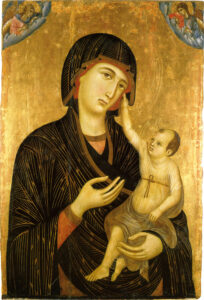
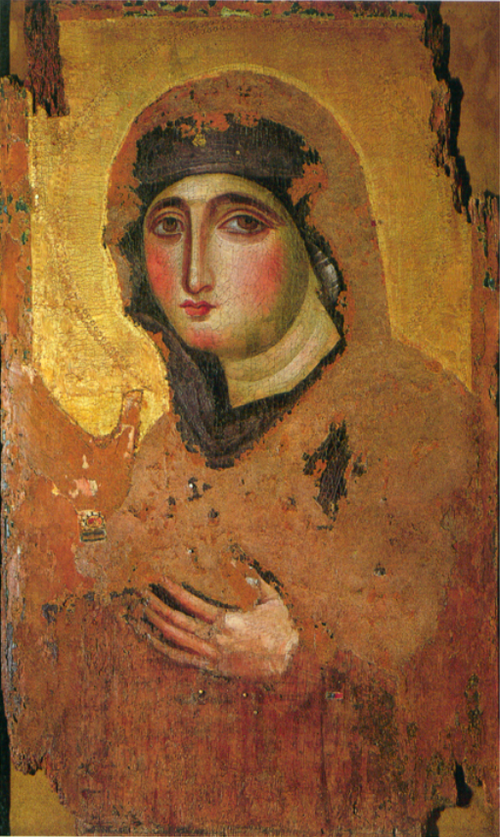
The journey of the Seven Dolors is officially sanctioned by the Church through a dual liturgical crown. This path is defined by two distinct feasts: the Friday before Good Friday, focusing on her presence at the height of the Passion, and September 15, the feast we now approach. These are not merely suggestions for the pious, but are woven into the very fabric of the Missal and Breviary—the official, public prayer of the Church. By adhering to these sanctioned days, the faithful align their pulses with the heartbeat of the Universal Church, participating in a tradition that spans centuries.

The Church “spares no pains” to induce her children to venerate the inexpressible sufferings of the Mother of God. These dolors are truly inconceivable, surpassing human estimate. To understand this, we must look to the linguistic root of “patience”—patior, meaning to suffer. Mary was the most “patient” of all because her heart was the most capable of suffering. The saints teach us that her whole life was a continuous series of tribulations, yet she suppressed every complaint with heroic fortitude, wholly conformed to the Divine Will as she offered her Son for the sins of the world.
“The sorrows of Mary were more than all the martyrs united.”
— St. Alphonsus Liguori
Mary and the Magisterium
The Magisterium has enriched this path with spiritual treasures, most notably through the “numerous indulgences” attached to the Rosary of the Seven Dolors by Popes Benedict XIII, Clement XII, and Leo XIII. Furthermore, the inclusion of the Stabat Mater Dolorosa in the official liturgy of the Way of the Cross signifies the Church’s high valuation of this Marian path. The Magisterium confirms that Mary is the “Queen of Martyrs,” whose internal martyrdom of the heart—transfixed by the sword of compassion—surpassed the physical tortures of all who have died for the name of Christ.

- How does the knowledge that this devotion is "officially sanctioned" by the Holy See provide a firmer foundation for your personal prayer life?
- As you contemplate the foundation of your spiritual journey, is it built upon the shifting sands of emotion or the solid rock of the Church’s liturgical tradition?
Closing Prayer
May we always walk in harmony with the official prayer of the Church, finding our sanctuary within her sacred mysteries.
Amen.