





Opening Prayer
O Lord Jesus Christ, grant me the fortitude to bear the visible or invisible wounds of my life with the same resignation shown by Thy servant, St. Padre Pio. Let my suffering not be wasted, but let it be a means of union with Thee through the pierced heart of Thy Mother.
Holy Mother, I petition for a share in thy post-Ascension sorrows. As thou didst spend thy remaining years renewing the memory of the Passion in thy heart, let me be united to thy “Friday suffering,” that my own infirmities may serve the work of redemption and the consolation of thy Son.
Amen.
Colossians 1:24
24Who now rejoice in my sufferings for you, and fill up those things that are wanting of the sufferings of Christ, in my flesh, for his body, which is the church:
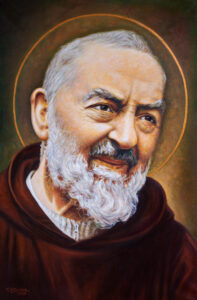
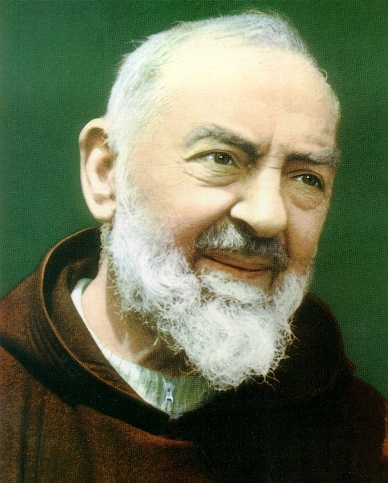
St. Padre Pio
St. Padre Pio is the modern archetype of the “Living Stigmata.” His life was a manifestation of the “participatory suffering” found in the source, where the intensity of love for Christ results in a share of His wounds. His suffering was not merely spiritual but penetrated “every nerve and fiber,” mirroring the lifelong martyrdom of Mary, the Queen of Martyrs, whose own being was steeped in the bitterness of the Cross.
According to the revelations to Mary of Agreda, the Blessed Virgin suffered inexpressibly every Friday for fifteen years after the Ascension. This “mystical reality” reveals that for the Christian, physical or spiritual illness is a “Friday” in their own calendar—a privileged time to unite with the Mother’s ongoing compassion. As Richard of St. Victor notes, “the more she loved, the more she suffered,” a reality reflected in the stigmatic’s life.
“Whatever tortures were inflicted on the bodies of the martyrs, they were but little compared with thy sufferings, O Mother!”
— St. Anselm
Mary and the Magisterium
The Magisterium has sanctioned the “Servants of Mary” (Servites) and the tradition of the Black Scapular. This garment is a strategic tool for living out shared suffering; its black color serves as a continual reminder of the sorrows Mary experienced at the death of her Son. Wearing it signifies a commitment to “venerate the sorrows of Mary” as a permanent share in the spirit of the Cross.
- How can you transform your current physical or spiritual "illness" from a burden into an act of "compassion" for Mary and her Son?
- Does your spiritual calendar include a "Friday"—a specific time where you intentionally clothe your soul in the "Black Scapular" of Mary's grief?
Closing Prayer
Mother, give me the grace of fortitude to stand beneath the Cross of my own life.
Amen.
