
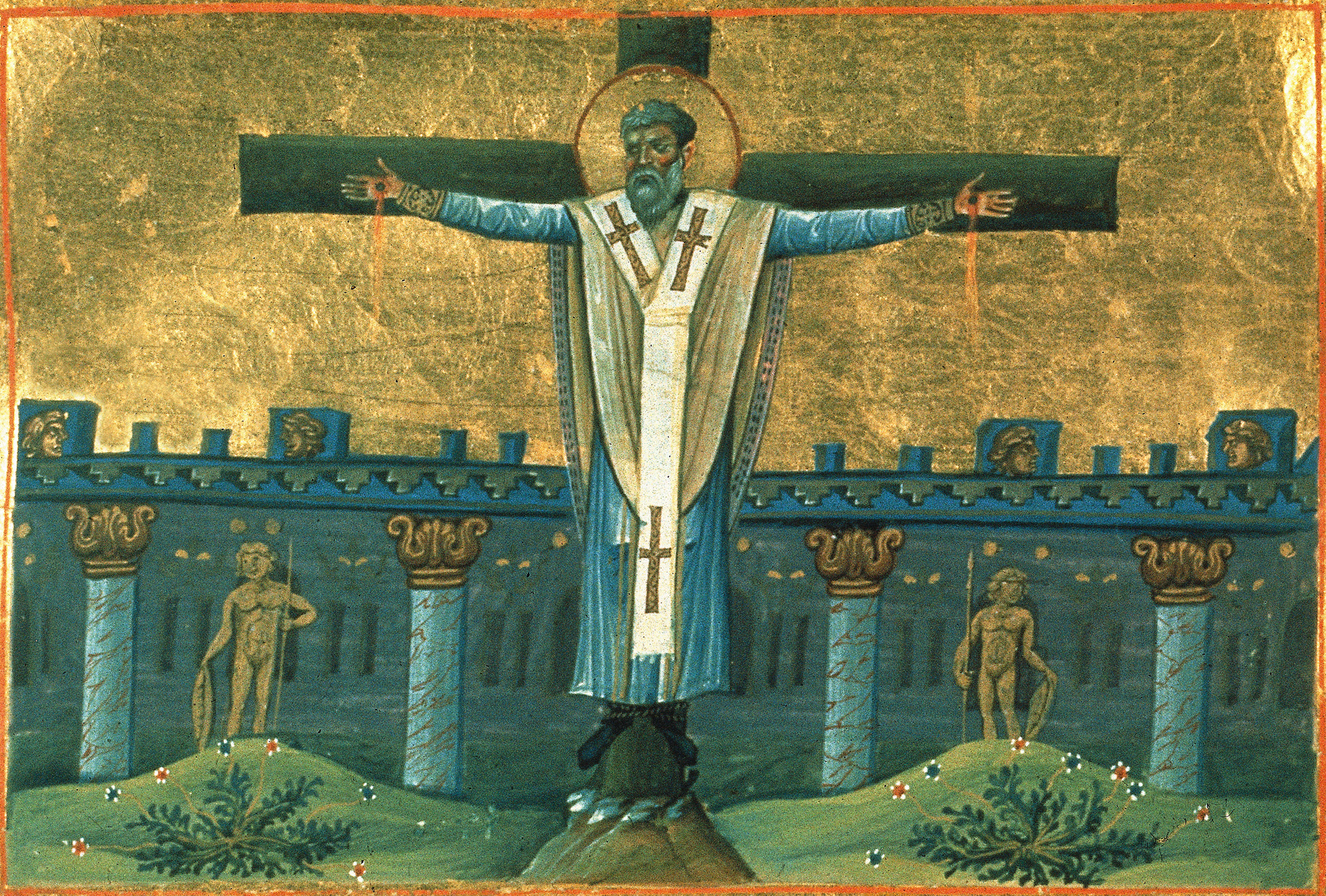
Opening Prayer
O Most Sorrowful Mother, I grieve with thee for the affliction of thy tender heart at the first shedding of thy Son’s Precious Blood and the solemn prophecy of Simeon. As thou didst behold the infant Savior, the sword of sorrow already began its passage through thy soul, wounding thee with the foresight of His bitter Passion and the knowledge of the price of our Redemption.
Grant me, dear Mother, the grace of a spiritual circumcision—the strength to cut away all inordinate passions and ungoverned desires that separate me from thy Son. I petition for the gift of holy fear, that I may never treat the sacrifice of the Cross with indifference, but always walk in the humility that thy sorrow demands, fearing only to offend Him who loved us unto death.
Amen.

Luke 2:34-35
34And Simeon blessed them, and said to Mary his mother: Behold this child is set for the fall, and for the resurrection of many in Israel, and for a sign which shall be contradicted; 35And thy own soul a sword shall pierce, that, out of many hearts, thoughts may be revealed.

Simeon of Jerusalem
The prophecy of Simeon served as a spiritual transfixion that lasted her (Mary) entire life. A profound theological distinction exists here: while the martyrs of the Church were often consoled in their torments by an inward gaze toward the Crucified, Mary’s gaze upon her Son was the very source of her anguish. Every increase of her love for Him augmented her sorrow. Simeon’s words—”And thy own soul a sword shall pierce“—meant that Mary’s sanctity and her suffering were inextricably linked, with the swords of sorrow penetrating every nerve and fiber of her tender, sinless body from that moment forward.

St. Bernardine of Siena provides a staggering theological insight, noting that Mary’s sorrow was so immense that if it were divided among all humanity, they would “die immediately“. St. Anselm further declares that the physical tortures of all martyrs combined were “but little” compared to Mary’s interior suffering. For the believer, this “sword of compassion” is the ultimate school of humility. If the Mother of God, the most noble and sinless of creatures, embraced a life of such profound interior wounding, we must recognize that our own trials are the necessary “twin sisters of love” on the path to sanctity, intended to strip away our pride and unite us to her Son.
“Behold, this child is destined for the fall and rise of many in Israel, and to be a sign that will be contradicted (and you yourself a sword will pierce) so that the thoughts of many hearts may be revealed.”
— Simeon of Jerusalem
Mary and the Magisterium
The Church formally venerates this mystery through the feast of the Seven Dolors, acknowledging that Mary’s greatness was proportionate to her suffering. Magisterial thought, reflecting the unanimous opinion of spiritual writers, suggests that Mary’s life was miraculously preserved by God’s omnipotence precisely so she could endure the weight of this suffering. St. Thomas Aquinas concluded that Divine Omnipotence itself could not invent a “greater greatness” than the Mother of God; thus, her trials had to correspond to her incomparable height of holiness to complete her perfection.

- In identifying your own "ungoverned passions," in what specific areas of your life is God currently calling you to a "spiritual circumcision" to foster a more holy fear of Him?
- How does the realization that Mary lived every moment of her life in the shadow of the Prophecy change your perspective on the sudden trials you face today?
Closing Prayer
Dear Mother, obtain for me the virtue of humility and the gift of the holy fear of God.
Amen.