
Opening Prayer
O Mother of Sorrows, I meditate upon thy heart-rending helplessness as thou didst stand beneath the Cross. According to the Dialogue of St. Anselm, thou didst see the Blood trickling from His thorn-crowned Head into His eyes and His lips parched and bloodless, yet thou wert unable to reach His sacred Face to wipe the spittle away or give Him a single refreshing drink.
I pray for the spiritual eyes to see Christ’s thirst in the poor and the abandoned. May I never pass by the suffering of my neighbor with a cold heart, but rather find in their distress the same “I Thirst” that echoed from the heights of Golgotha, seeking to do for them what thou wert prevented from doing for thy Son.
Amen.

John 19:25-28
25Now there stood by the cross of Jesus, his mother, and his mother’s sister, Mary of Cleophas, and Mary Magdalen. 26When Jesus therefore had seen his mother and the disciple standing whom he loved, he saith to his mother: Woman, behold thy son. 27After that, he saith to the disciple: Behold thy mother. And from that hour, the disciple took her to his own. 28Afterwards, Jesus knowing that all things were now accomplished, that the scripture might be fulfilled, said: I thirst.

St. Teresa of Calcutta
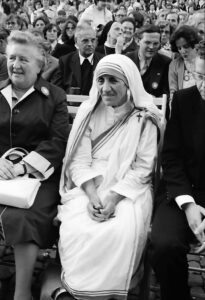
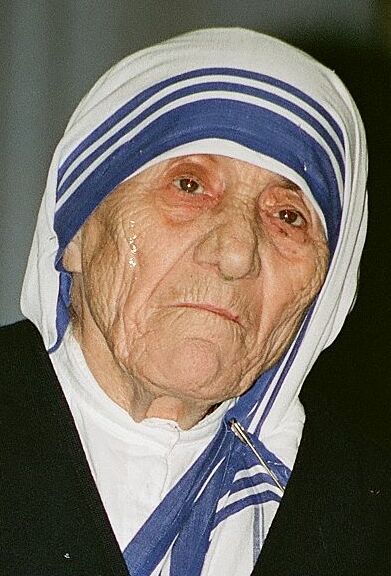
The “I Thirst” devotion, so central to the life of St. Teresa of Calcutta, connects the physical parching of the Savior to His spiritual agony over man’s ingratitude and the eternal perdition of souls. The gist of this spirituality lies in the realization that our cold indifference and relapses into sin are what truly cause the Savior’s heart to ache. To slake His thirst is to offer Him our sincere contrition and our active works of mercy toward those He called the “least of His brethren“.

In the Dialogue with St. Anselm, we see the specific interaction where Mary’s anguish is deepened by her inability to offer relief. She was prevented from supporting His thorn-crowned head or letting it repose upon her bosom. This teaches us that when we practice fraternal charity toward the poor, we are comforting the Sorrowful Mother by performing the acts of mercy she was denied at Calvary. By wiping the brow of the suffering or offering a drink to the parched, we directly alleviate the “dreadful helplessness” that was Mary’s greatest torture.
“The most terrible poverty is loneliness, and the feeling of being unloved.”
— St. Teresa of Calcutta
Mary and the Magisterium
Mary is rightfully titled the “Mother of Mercy” and “Comforter of the Afflicted“. The Church teaches that she became our Mother specifically at the Foot of the Cross, where she offered her Son willingly for our salvation. It was there that she was miraculously sustained; without the special aid of God’s omnipotence, the weight of her compassion for the thirst of the human race and the suffering of her God would have caused her soul to separate from her body.

- Can you identify a specific "spiritual thirst"—a need for hope, dignity, or presence—in someone close to you today? How can you practice mercy to slake it?
- When you encounter suffering that you cannot physically alleviate, how does Mary’s tranquil submission at the Cross provide a blueprint for your own prayerful, loving presence?
Closing Prayer
Holy Mary, Mother of the Crucified, implore for us the grace of true compassion.
Amen.