
Opening Prayer
O Mary, Comforter of the Afflicted, we invoke thy powerful intercession for all those who groan under the weight of physical or spiritual chains. Thou who didst behold thy Divine Son bound and led away like a lamb to the slaughter, look with mercy upon those who are currently held in the grip of injustice, addiction, or despair.
Through the merits of thy own desolation, break the bonds that keep thy children from the freedom of the Gospel. May thy maternal presence provide a haven for the shipwrecked and a refuge for the sinner. We ask that thou wouldst stand by those who are forgotten by the world, just as thou didst stand by the Cross of thy Son, and lead them to the light of His redeeming love.
Amen.

Tobias 4:3-4
3When God shall take my soul, thou shalt bury my body: and thou shalt honour thy mother all the days of her life: 4For thou must be mindful what and how great perils she suffered for thee in her womb.

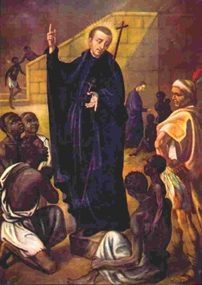
St. Peter Claver

The ministry of St. Peter Claver to the enslaved finds its supernatural prototype in Mary’s own experience of her Son’s captivity. In the face of human injustice, Mary’s empathy is a providential preparation; she understands the bitterness of being handled without mercy. This empathy is rooted in a striking typological connection: the thirty pieces of silver paid to Judas were the very same coins the Ishmaelites paid for the enslaved Joseph. These coins, preserved in the temple treasury, were ten times the size and weight of a usual denarius, symbolizing the immense weight of the betrayal. By experiencing the captivity of her Son—the New Joseph—Mary draws near to all who are treated as commodities. Her personal experience of the “Golden Gate” as a passage to judgment empowers her to comfort those in the modern “chains” of systemic or personal bondage.

St. Alphonsus Liguori, the great Doctor of the Church, exhorts “poor abandoned sinners” never to despair. He reminds us that Mary is truly the “Mother of Mercy,” who looks not at the number of our sins, but at the disposition of our hearts. She is prepared to receive and heal even the most wayward soul, provided there is a sincere purpose of amendment.
“HAIL Mary, full of sorrows, the Crucified is with thee; thou art pitiable amongst women, and pitiable is the Fruit of thy womb, Jesus. Holy Mary, Mother of the Crucified, implore for us, the crucifiers of thy Son, tears of contrition, now and at the hour of our death. Amen.”
— The Sorrowful Hail Mary, composed by Pope Pius IX
Mary and the Magisterium
The Magisterium has long approved the “Servants of Mary” (Servites), a religious order founded by seven noblemen of Florence to foster devotion to her sorrows. The Black Scapular, invested by Mary herself, serves as a sign of her protection and a reminder of her grief. This ecclesiastical sanction highlights that the Church views Mary’s sorrows as an essential focus for the faithful. As we reflect on our own spiritual “chains,” we look to her collective wisdom for the strength to be liberated.

- In what ways am I blind to the modern "chains" of injustice in my community, and how can Mary’s empathy sharpen my vision?
- How can I extend the comfort I receive from the Mother of Sorrows to those in my life who are currently "afflicted"?
Closing Prayer
Break the bonds of the captive, O Lord, through the desolation of the maternal heart of Mary.
Amen.